Sell in Google AI Mode: A Merchant's Guide to the Universal Commerce Protocol
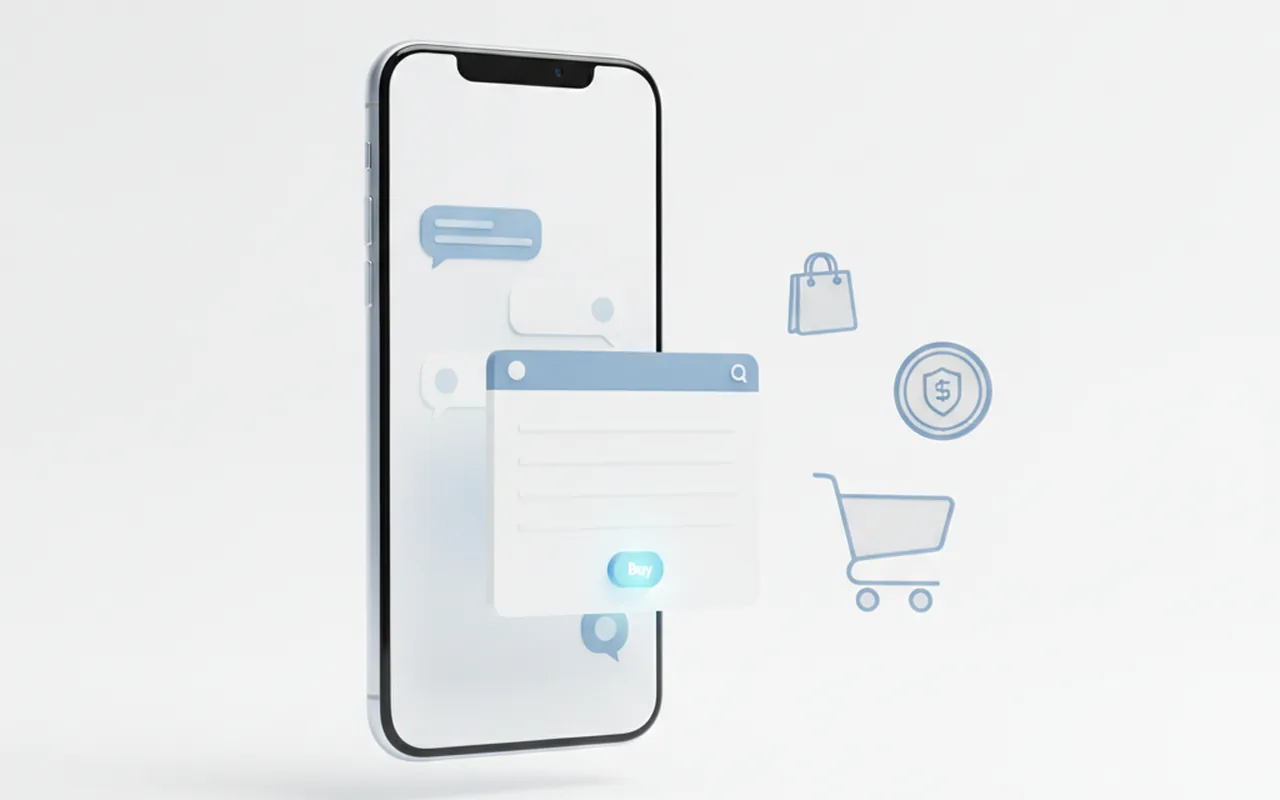
For most of the last year, "buying inside a chatbot" was a demo, not a channel. That changed with Google's Universal Commerce Protocol (UCP). As of early 2026, eligible U.S. merchants can integrate UCP to place a Buy button on product listings inside AI Mode in Google Search and the Gemini app — letting a shopper go from "I want this" to "I bought this" without ever leaving the conversation. In March 2026 Google extended UCP with carts, real-time catalog access and loyalty identity linking, and began rolling out simplified onboarding through Merchant Center.
This is a different problem from being recommended by an AI. UCP is the plumbing that lets the sale itself complete on Google's surfaces while you stay the merchant of record. This guide explains what UCP is, how it differs from the other agentic-commerce protocols, and the concrete steps to make your store eligible — and whether you should.
What is the Universal Commerce Protocol?
UCP is an open standard Google published to give AI shopping surfaces a common language for talking to merchant back ends. Instead of every assistant scraping every store in its own bespoke way, UCP defines a shared vocabulary for the things a purchase needs: product discovery, variants and inventory, cart operations, and checkout. A "consumer surface" — AI Mode on Search, the Gemini app, and, Google says, others to come — speaks UCP to a "business back end" so the two can transact without a custom integration per pairing.
The headline capability for shoppers is in-conversation checkout. When your listing is UCP-eligible, Google can render a Buy button directly on the product card the assistant shows. The shopper confirms, pays through Google Pay, and the order lands in your system — no tab-hop to your site, no re-entry of card or address. Crucially, Google's framing keeps you in control: you own your business logic, you remain the merchant of record, and you keep the customer relationship and post-purchase data. UCP is a connective layer, not a marketplace that takes over your storefront.
How UCP differs from ACP and AP2
If you have read our guide to agentic commerce, you have already met two other acronyms — ACP and AP2. They are not competitors to UCP so much as neighbors solving adjacent problems. It helps to see them side by side.
| Standard | Backer | Primary job | Where it runs |
|---|---|---|---|
| UCP (Universal Commerce Protocol) | Connect merchant catalogs and checkout to AI surfaces (discovery, cart, buy) | Google AI Mode & Gemini | |
| ACP (Agentic Commerce Protocol) | OpenAI, Stripe | Agentic checkout, cart and delegated payment tokens | ChatGPT and compatible agents |
| AP2 (Agent Payments Protocol) | Google + partners | Cryptographic "mandates" proving a user authorized an agent | Payment/authorization layer |
The clean mental model: ACP is the OpenAI-side path for completing a sale inside ChatGPT, UCP is the Google-side path for completing a sale inside AI Mode and Gemini, and AP2 is the trust layer that can sit underneath either to prove genuine user consent. Google has said UCP is designed to interoperate rather than fence merchants in, and early partners — Salesforce, Stripe and commerce platforms among them — signaled support in the March 2026 update. In practice a serious store will likely end up speaking more than one of these, because your buyers are split across ChatGPT and Google's surfaces.
What the March 2026 update added
The initial UCP checkout was deliberately narrow — a single Buy button on a single eligible listing. Three additions moved it closer to how people actually shop:
- Carts. An agent can now save or add multiple items to one cart from a single store in a single flow, instead of buying one product at a time.
- Catalog access. Agents can pull real-time product information — variants, inventory and pricing — straight from the retailer's database, so what the shopper sees in the chat is current rather than a stale feed snapshot.
- Identity linking. When a shopper is logged in, loyalty status and member benefits carry across integrated surfaces, so an agentic purchase can still earn points or apply member pricing.
Alongside the features, Google said it is "actively working to onboard more retailers of all sizes" through a simplified Merchant Center flow rolling out over the following months — a signal that UCP is moving from a hand-picked pilot toward general availability.
How to make your store UCP-eligible
Getting on UCP is mostly commerce-data hygiene plus a checkout decision. Work through these in order; the early steps also improve your standing in AI shopping generally, so none of it is wasted even if you hold off on in-chat checkout.
- Get a clean feed into Merchant Center. UCP eligibility runs through Google Merchant Center, so an accurate, current product feed is the entry ticket. Fix disapprovals, fill required attributes, and keep price and availability in sync with your store.
- Enrich your
Productstructured data. Brand, GTIN,aggregateRatingand a completeoffersblock — currency, price,availabilityandpriceValidUntil— are what let an agent qualify and compare your item. This is the same groundwork that wins you visibility in AI shopping across assistants, not just Google. - Expose real-time inventory and pricing. With catalog access, agents read live data. Inaccurate stock or delivery estimates now cause automated cancellations, not just annoyed shoppers — so treat feed accuracy as a checkout-grade requirement.
- Wire up Google Pay and confirm merchant-of-record terms. UCP checkout settles through Google Pay while you remain the seller of record. Confirm how refunds, disputes and tax are handled on your side before you switch the Buy button on.
- Enable UCP checkout in Merchant Center. Opt into the UCP-powered checkout feature and validate against Google's merchant documentation. Start with a subset of catalog to watch order flow, cancellations and settlement before expanding.
- Instrument the channel. Because discovery and the sale can both happen inside the assistant, classic analytics under-report it. Tag agentic orders, watch settlement reports, and prompt-test the buying questions you want to win.
Should you turn it on?
Eligibility is not the same as strategy. In-conversation checkout is strongest for products where price, availability and delivery decide the sale — commodities, repeat purchases, gifts under time pressure. There, meeting the buyer at the exact moment of decision is pure upside, and the friction you remove (no tab-hop, no re-entry) directly lifts conversion.
The calculus is harder for brands that sell on story, fit or a curated experience. UCP keeps you the merchant of record, which is a meaningful protection, but a Buy button on a chat card still compresses your storefront into a product and a price. If your differentiation lives on your product page — configurators, styling, editorial — you are handing some of that persuasion to Google's interface. That is a deliberate trade, not a default. The good news is that the discovery-side work (feeds, schema, trust signals) pays off either way, so you can be discoverable to AI shoppers without committing to in-chat checkout on day one.
Where this fits in the bigger shift
UCP is one piece of a broader move from "ten blue links" to answers and actions. Google is reorganizing results with AI-clustered features — see our take on what Google Web Guide means for SEO — while assistants increasingly complete tasks rather than just describe them. The through-line for merchants is the same: the entities that win are the ones whose data is machine-first and whose trust signals are verifiable. UCP simply extends that logic from being found to being bought. Set the plumbing now, decide your checkout posture deliberately, and you will be ready as agentic purchase volume grows rather than scrambling once it does.
The takeaway
Google's Universal Commerce Protocol makes in-conversation checkout a real channel on AI Mode and Gemini, with carts, live catalog access and loyalty linking added in March 2026 and onboarding widening through Merchant Center. The technical bar is mostly clean feeds, rich Product schema and Google Pay setup — work that also strengthens your AI-shopping visibility everywhere. The strategic question is whether to let the sale finish inside the assistant, and that answer depends on how much of your value lives on your own storefront. Get eligible first; decide the Buy button second.