How to Get Your Products Into AI Shopping in 2026
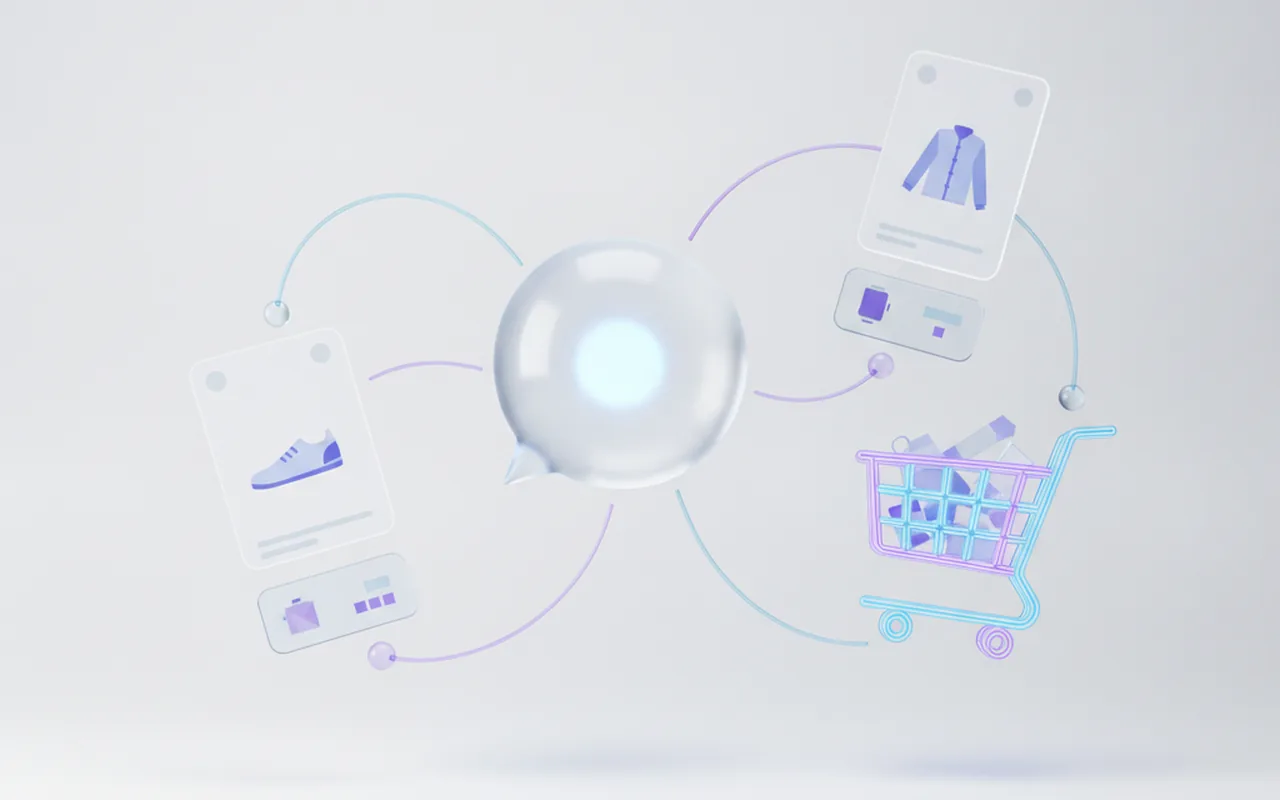
Shopping is moving into the chat window. Through the first half of 2026, both ChatGPT and Perplexity pushed hard into commerce — recommending products conversationally, and in a growing number of cases letting people buy without ever leaving the assistant. In late July, coverage from Search Engine Land and others confirmed the two are racing deeper into AI shopping, each building its own path from "which one should I buy?" to a completed order.
For anyone selling online, that raises a blunt question: when a shopper asks an AI assistant for a recommendation in your category, does your product show up — or does a competitor's? This guide explains how AI shopping actually selects products and gives you a practical checklist to become one of the options it surfaces.
What changed in AI shopping in 2026
Two shifts turned AI assistants from answer engines into shopping channels.
First came Instant Checkout. OpenAI, working with Stripe, introduced an open standard called the Agentic Commerce Protocol (ACP) that lets a shopper complete a purchase inside ChatGPT. It started with U.S. Etsy sellers and is rolling out to Shopify merchants, with brands like Glossier, Vuori and SKIMS named as early participants. Payment runs through a Stripe-issued token so the assistant can place the order without ever seeing the buyer's card details. OpenAI charges the merchant a small per-transaction fee; shoppers pay nothing extra.
Second, Perplexity expanded its free U.S. shopping experience, built around the idea that the assistant should help a shopper research and compare rather than replace the decision. For merchants, Perplexity offers an unusually short on-ramp: product data from many U.S. Shopify stores is shared automatically, and stores that already accept PayPal can appear through the PayPal merchant network without separate enrollment.
The common thread is that discovery, comparison and — increasingly — the transaction now collapse into a single conversation. This is the buy-side mirror of what we covered in optimizing for AI search: the same retrieval-and-synthesis behaviour, pointed at products instead of articles.
How AI assistants pick which products to recommend
AI shopping is not a mystery box. Each assistant leans on structured product data, established feeds and brand signals it can verify. The mechanics differ by platform, but three inputs matter everywhere.
- A clean, complete product feed. ChatGPT draws the large majority of its product data from existing shopping feeds — practically, that means a Bing Merchant Center (and Google Shopping) feed. If your catalogue isn't in a feed the assistant reads, your products effectively don't exist in its shopping answers.
- Structured data on the product page. Assistants use
ProductandFAQPageschema to qualify an item. The fields that decide eligibility are often the ones stores omit: brand, GTIN,aggregateRating, and anoffersblock with currency, price andpriceValidUntil. - Brand and trust signals. Both ChatGPT and Perplexity treat brand strength as a proxy for product quality and reliable fulfilment — review volume and recency, editorial mentions on relevant sites, press coverage and social proof the crawler can see.
One statistic frames the opportunity. In a 2026 analysis, only about 9% of Shopify product pages carried the structured data needed to be recommended by ChatGPT or Perplexity — meaning roughly nine in ten stores were invisible to AI shopping. The bar to stand out is currently low.
The three platforms at a glance
Each surface has a different audience and a different mechanic. Optimising for one does not automatically win the others.
| Platform | Primary data source | Merchant on-ramp | In-chat checkout |
|---|---|---|---|
| ChatGPT | Bing / Google Shopping feeds | Submit a product feed; join Instant Checkout (ACP) | Yes, via ACP |
| Perplexity | Shopify data + web crawl | Automatic for many U.S. Shopify stores; PayPal network | Yes, for enrolled merchants |
| Microsoft Copilot | Bing index & Merchant Center | Bing Webmaster Tools + Merchant feed | Links out |
ChatGPT has the widest reach by user count, Perplexity offers the fastest technical path for Shopify sellers, and Copilot rewards the same Bing groundwork that already helps with AI answers. The good news: the underlying work — a solid feed, rich schema and a credible brand — pays off across all three.
A practical checklist to become AI-shoppable
Work through these in order. The first items are quick technical fixes; the later ones compound over weeks.
- Let the crawlers in. In
robots.txt, allow the shopping and answer bots you want to reach you —OAI-SearchBotandChatGPT-Userfor ChatGPT,PerplexityBotfor Perplexity,Google-Extendedfor Google's AI surfaces. Blocking them, even accidentally, removes you from consideration. - Submit a complete product feed. Get your catalogue into Bing Merchant Center and Google Shopping. Without a feed, ChatGPT and Copilot have nothing to pull.
- Enrich your
Productschema. Go beyond name, price and image. Add brand, GTIN,aggregateRatingand a fulloffersobject with currency, price andpriceValidUntil. These are the fields that qualify an item for a recommendation. - Fix your category taxonomy. Assistants match products to intent using precise categories. "Apparel & Accessories > Shoes > Athletic Shoes" is far more useful than a vague "Footwear."
- Publish buying guides, not just product pages. Comparison and buyer's-guide content earns AI citations at a higher rate than a bare product description. Answer the real questions shoppers ask before they choose.
- Strengthen brand proof. Encourage fresh reviews on Google and Trustpilot, earn editorial mentions in your category, and make ratings visible to crawlers. Brand is the tiebreaker between comparable products.
- Keep pages fast. Aim for an LCP under about 2.5 seconds. Slow, heavy product pages are harder to crawl and less likely to be surfaced.
- Decide on in-chat checkout. If in-chat purchases fit your model, evaluate Instant Checkout / ACP and the Perplexity path — weighing the transaction fee against reaching buyers at the exact moment of decision.
How long it takes and what to expect
Technical changes move fast. Opening up robots.txt, submitting a feed and adding schema can improve crawler access and eligibility within days. The slower, compounding work is content-driven citation growth — buying guides, topic clusters and interlinking — which typically takes 60 to 90 days of consistent publishing to show up as steady recommendations.
Set expectations accordingly. AI shopping is not a switch you flip; it is a channel you earn into. But because so few stores have done the groundwork, the sellers who move now capture visibility that will be far more contested a year from now.
Measuring AI shopping visibility
Classic analytics under-report this channel, because a recommendation — and sometimes even the purchase — can happen inside the assistant. Track a wider set of signals:
- Prompt checks. Regularly ask ChatGPT, Perplexity and Copilot the buying questions you want to win ("best waterproof running shoes under $120") and record whether you appear.
- Referral and assisted traffic. Watch analytics for visits from
chatgpt.com,perplexity.aiand Bing AI surfaces, and for checkout activity tied to agentic sources. - Feed and schema health. Monitor Merchant Center for disapprovals and validate
Productmarkup — most invisibility traces back to a broken feed or a missing field. - Share of recommendation. Compare how often you surface versus named competitors for your core queries, and track the trend.
This is the natural next step once you understand how the AI buying journey differs from classic search: visibility is measured by whether you are recommended, not only by where you rank.
The takeaway
AI shopping in 2026 rewards the same discipline that wins in AI search — clean data, rich structure and a trustworthy brand — applied to your catalogue. Get your products into the feeds assistants read, enrich the schema they use to qualify items, and give them a credible brand to trust. Do that while most stores are still invisible, and you position your products to be the ones ChatGPT and Perplexity put in front of a shopper at the moment they are ready to buy. If in-chat checkout suits your business, it can shorten that path from recommendation to sale to a single tap. For the paid side of the same shift, see our guide to AI search advertising across ChatGPT, Google and Perplexity.