Code Review Best Practices: A Practical Guide for 2026

TL;DR: Code review is the step where a second developer checks a change before it merges — and it's the single cheapest place to catch bugs, security gaps and design problems. Teams that do it well review small pull requests (200–400 lines), start within 24 hours, use a written checklist, and track metrics like review turnaround and defect escape rate. If you're outsourcing development, ask your vendor for their review process before you ask about their stack.
What Is Code Review, and Why Does It Matter?
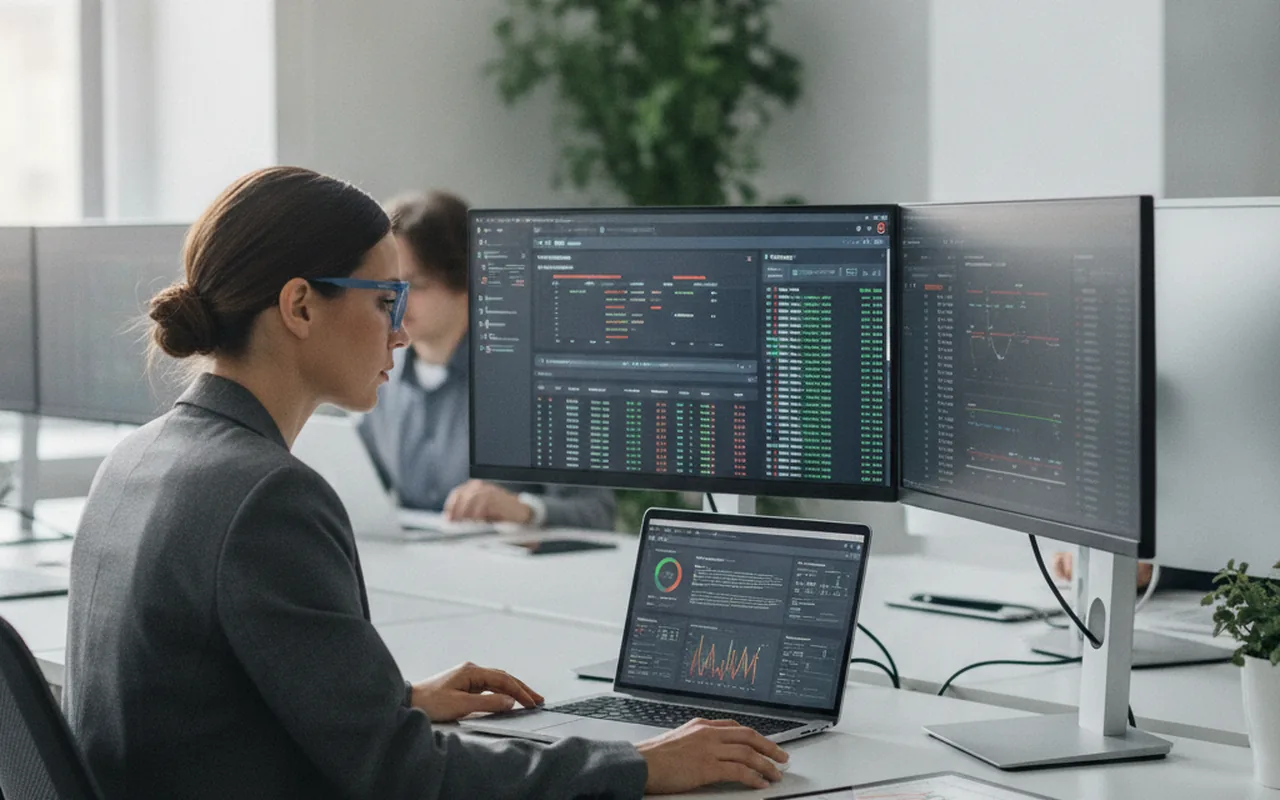
Code review is the practice of having at least one other developer read and evaluate a code change before it gets merged into the main codebase. In practice it usually happens through a pull request (PR) or merge request: a developer proposes a change, a reviewer reads the diff, leaves comments, and either approves it or asks for revisions.
It sounds like a small procedural step, but it is one of the highest-leverage quality controls in software development. According to Google's engineering practices for code review, a reviewer should be checking the design, functionality, complexity, tests, naming and style of a change — the goal isn't a perfect diff, it's a change that leaves the codebase in a measurably better state than before. That framing matters: code review isn't about nitpicking semicolons, it's a structured second look at whether the change actually does what it claims to do, safely.
For a business owner or a non-technical founder, the relevant question is simpler: does your development team, in-house or outsourced, actually do this on every change, or does code go straight from a developer's laptop to production? The answer has a direct line to how many bugs reach your users and how quickly your team can safely ship new features.
It also matters who is reviewing and why. Code review serves at least three overlapping purposes that are worth separating, because teams that only focus on one of them tend to under-invest in the others. The first is defect prevention — catching the logic errors, missed edge cases and security gaps before they reach a customer. The second is knowledge sharing — a second developer reading every change means no single person is the only one who understands a given part of the system, which matters enormously the day that person is on vacation, leaves the company, or gets pulled onto something else. The third is consistency — review is where a team enforces its own conventions, so the codebase reads like it was written by one disciplined team rather than a dozen people with a dozen different styles. A process that nails defect prevention but ignores knowledge sharing will still leave you exposed the moment a key engineer is unavailable.
None of this requires a heavyweight process. Small, well-run teams can do excellent code review with nothing more than a pull-request workflow, a short written checklist, and a cultural expectation that nothing merges without a second set of eyes. The failure mode worth watching for isn't a missing tool — it's a missing habit.
The Real Cost of Skipping Review
The clearest illustration of what happens when review is weak or absent is Heartbleed, the 2014 OpenSSL vulnerability that exposed private keys, passwords and session data across a huge share of the encrypted web. The flawed code — a missing bounds check in a heartbeat extension — sat in a widely used open-source library for roughly two years before anyone caught it. It is routinely cited in security and engineering circles as a case study in how a single unreviewed (or inadequately reviewed) change can carry a cost measured in hundreds of millions of dollars in incident response, patching and reputational damage across thousands of organizations.
Most teams will never ship a bug with Heartbleed's scale, but the underlying lesson generalizes: the cost of catching a defect goes up the further it travels. A problem flagged in review costs a few minutes of a reviewer's time. The same problem caught in QA costs a test cycle. Found in production, it costs an incident, a hotfix, and — depending on what broke — a customer. This is sometimes described as the "cost of change curve": the price of fixing a defect roughly multiplies at every stage it survives, from code review to QA to staging to production, and again if a customer finds it before your own monitoring does.
The costs aren't only technical, either. A missed defect that reaches production usually means an engineer gets pulled off planned roadmap work to fix it under pressure, a support team fields confused or frustrated customers, and — if the bug touches data or security — there may be a disclosure obligation and a trust cost that outlasts the fix itself. None of that shows up on a project timeline until it happens, which is exactly why review discipline tends to get cut first when a team is behind schedule, and why that's usually the wrong place to cut.
How Long Should Code Review Take?
Speed is one of the most common failure points in code review, and it's one business owners rarely think to ask about. A review process that technically exists but takes a week to get to is almost as bad as having no review at all — it just trades one kind of risk (shipping unreviewed code) for another (shipping slowly, or developers quietly bypassing review to hit deadlines).
The 24-Hour Rule
A widely used practical benchmark is to start reviewing a pull request within 24 hours of it being opened. This doesn't mean the review has to be finished in a day — complex changes legitimately take longer — but the reviewer should at least look at it, leave initial feedback, or flag that it needs more time, within one business day. For a properly sized change (see the next section), the review itself should typically take well under an hour of focused reading.
Why Slow Reviews Kill Momentum
When review turnaround stretches into days, two things happen. First, the original developer context-switches to other work and has to re-load the details of the change when feedback finally arrives, which is slower and more error-prone than reviewing it fresh. Second, pull requests start to pile up and get merged with less scrutiny than they deserve, simply because the team is under pressure to clear the backlog. Slow review doesn't just delay shipping — it quietly degrades review quality over time.
There's also a compounding effect specific to teams, not individuals: when one developer's PR sits unreviewed for three days, every change that depends on it sits waiting too. On a team of five engineers working on related parts of the same feature, a single slow reviewer can become the bottleneck for the whole group, even though nobody intended that. The fix is rarely "review faster under pressure" — it's distributing review responsibility across more than one person, and treating review as scheduled work on the calendar rather than something squeezed in between other tasks. Teams that block 30–60 minutes at the start or end of each day specifically for review tend to hit the 24-hour benchmark far more consistently than teams that treat it as an interrupt.
What Should You Look For in a Code Review?
A good reviewer is checking several distinct things at once, and it helps to separate them so nothing gets skipped under time pressure.
Design & Architecture
Does this change fit the existing structure of the system, or does it bolt on a parallel way of doing something the codebase already does elsewhere? Design review is the most valuable and the most frequently skipped part of the process, because it requires understanding the broader system, not just the diff in front of you. A reviewer doing this well asks questions like: is this the right layer of the application for this logic to live in? Does it duplicate something that already exists under a different name? Will this approach still make sense if the feature grows the way product plans suggest it will in six months? Catching a design problem in review costs a conversation; catching the same problem after three more features have been built on top of it costs a rewrite.
Correctness and Edge Cases
Does the code do what the PR description says it does? Reviewers should actively think about inputs the author may not have tested — empty values, unusual user permissions, concurrent requests, network failures — and whether the change handles them gracefully or silently breaks. A useful habit is to deliberately try to break the change in your head before approving it: what happens if this API call times out? What happens if two users trigger this at the same instant? What happens if the list this code expects is empty instead of populated? Authors are naturally biased toward the path they tested; a reviewer's job is partly to think about the paths they didn't.
Security
Every reviewer should bring a basic security mindset to every change, not just changes that "look" security-related. According to Educative's guide to code review best practices, security deserves its own standing checklist item precisely because it's the category most likely to get skipped when a reviewer is focused on functionality. In practice that means checking for unvalidated user input, hardcoded credentials or secrets, missing authorization checks (does this endpoint confirm the requesting user actually owns this resource?), and new dependencies being pulled in without a clear reason — every added package is additional attack surface and an additional thing to keep patched. This doesn't require a dedicated security engineer on every review — it requires the habit of asking "what could go wrong if this input were malicious or this user were not who they claim to be?" as a standing part of the checklist, not a special pass reserved for changes that are obviously security-related.
Readability and Maintainability
Code is read far more often than it's written. A reviewer should flag code that works but will be genuinely hard for the next developer to understand six months from now — unclear naming, missing comments on non-obvious logic, functions doing too many unrelated things at once. Maintainability concerns are easy to wave off under deadline pressure ("it works, ship it"), but they're exactly the kind of debt that doesn't show up on a budget until a new developer spends two days trying to understand code that a clearer version would have taken twenty minutes to grasp.
Keep Pull Requests Small — Here's Why
Pull request size is one of the strongest predictors of review quality, and it's backed by actual research, not just convention. A well-known internal study from Cisco's engineering team found that review effectiveness drops sharply once a change grows past a certain size — reviewers start skimming instead of reading, and defect detection rates fall. The practical guidance that comes out of that research is to keep changes to roughly 200–400 lines of code wherever possible.
This has an obvious trade-off: large features sometimes genuinely require large changes. The fix isn't to ban big features — it's to break the implementation into a sequence of small, independently reviewable pull requests (behind a feature flag if the feature isn't ready for users yet). A team that consistently ships 1,500-line PRs "because the feature was big" is usually a team that hasn't learned to decompose work, and it's a fair question to ask a development vendor how they handle this.
Small PRs also change the social dynamics of review for the better. A 300-line change can realistically be read carefully in one sitting, and a reviewer who understands the whole thing can give specific, confident feedback. A 2,000-line change forces a reviewer to choose between spending half a day on one PR or skimming it and approving on trust — and under real-world time pressure, most people end up skimming. The result is a review that exists on paper but doesn't actually catch much, which is arguably worse than no review at all, because it creates false confidence that the change was checked.
A Practical Code Review Checklist
A written checklist keeps review consistent across different reviewers and prevents fatigue from causing things to slip through. A solid baseline checklist covers:
- Does the change solve the stated problem? Re-read the ticket or PR description and confirm the code actually addresses it.
- Is the change reasonably sized? Flag anything well outside the 200–400 line range for a possible split.
- Are there automated tests covering the new behavior? Including at least one test for a realistic failure case, not just the happy path.
- Does it handle bad input and edge cases? Empty, null, oversized, malformed, or unauthorized input.
- Are secrets, credentials and config out of the code? Nothing hardcoded that should live in environment variables or a secrets manager.
- Does it introduce a new dependency? If so, is there a reason it can't be done with what's already in the project?
- Is error handling visible, not swallowed? Failures should be logged or surfaced, not silently caught and ignored.
- Is naming clear enough that comments aren't doing the explaining? Functions, variables and files should describe what they do.
- Does it match existing patterns in the codebase? Or does it introduce a parallel way of solving an already-solved problem?
- Would a new team member understand this in six months? The final, catch-all readability check.
How to Give Feedback That Doesn't Create Friction
Code review fails socially more often than it fails technically. Reviewers who phrase feedback as personal judgment ("this is sloppy") create defensiveness and slow teams down, even when the underlying concern is valid.
Base Comments on Facts, Not Preference
The most durable rule is to anchor feedback in something objective — a known failure mode, a documented team standard, a measurable risk — rather than personal taste. "I would have done this differently" is a weak comment. "This will throw if the array is empty — can we add a length check?" is a strong one, because it points at a concrete, checkable problem rather than a style preference.
| Weak comment | Strong comment |
|---|---|
| "This is confusing." | "This function does three unrelated things — could we split it into validate(), save(), and notify()?" |
| "I wouldn't do it this way." | "This duplicates the retry logic in auth.js — can we reuse that helper instead?" |
| "Bad naming." | "`data` doesn't say what this holds — maybe `pendingOrders`?" |
| "This looks risky." | "This endpoint doesn't check that the requesting user owns the record — looks like an authorization gap." |
| "Not a fan of this approach." | "This will re-query the database inside the loop — could we fetch once before the loop starts?" |
Framing comments as questions rather than commands ("could we fetch once before the loop?" instead of "fetch once before the loop") also tends to open a conversation rather than shut one down, especially when the reviewer might be missing context the author has. It's also worth distinguishing between comments that must be resolved before merge and comments that are optional suggestions — many teams use a lightweight prefix convention like "blocking:" versus "nit:" so the author doesn't have to guess how much weight a given comment carries. Without that distinction, authors either treat every comment as mandatory (which slows everything down) or start ignoring comments altogether (which defeats the point of review).
It's equally important that authors receive feedback well. A defensive response to every comment trains reviewers to stop leaving honest feedback, which quietly erodes the whole process. The healthiest teams treat review comments the way they'd want a colleague to treat their own code: as information about the change, not a verdict on the person who wrote it.
When to Require Two Reviewers Instead of One
Most changes only need a single reviewer, and requiring more than that for everything just slows the team down without adding proportional safety. But a second reviewer is worth the extra time for a specific, narrow category of high-risk changes: authentication and authorization logic, payment processing, data deletion, and anything touching validation that protects user data. These are the areas where a single missed edge case has outsized consequences, and a second set of eyes meaningfully reduces that risk. The practical move is to codify this as a rule — "payments and auth code require two approvals" — rather than leaving it to individual judgment on a busy day.
There's a secondary benefit beyond catching more bugs: a second reviewer on sensitive code also means no single engineer has unilateral control over the parts of the system most likely to cause serious harm if compromised or misused. For businesses handling payment data, health information, or other regulated data, this isn't just good practice — it's often close to what auditors and compliance frameworks expect to see when they ask how a company controls changes to systems handling sensitive data.
Automating the Boring Parts: Linters, CI, and SAST
Human reviewers shouldn't be spending their limited attention on things a machine can catch instantly. Linters and formatters should enforce style consistency before a human ever opens the PR. Continuous integration (CI) should run the automated test suite on every change automatically. Static application security testing (SAST) tools should scan for known vulnerability patterns — SQL injection shapes, hardcoded secrets, insecure deserialization — as a standing gate, not a manual step someone remembers to run occasionally.
This division of labor is important: automation handles the mechanical, repeatable checks, which frees the human reviewer to focus on design, correctness and security judgment calls that a tool can't make. A team with no automated checks is making its human reviewers do work that doesn't need a human; a team that treats automated checks as a replacement for human review is skipping the judgment calls that actually matter most.
AI-assisted code review tools have become common additions to this stack over the past couple of years, scanning diffs for likely bugs and suggesting fixes automatically. They're genuinely useful as another automated layer — catching things a linter might miss, surfacing a relevant past incident, or summarizing a large diff for the human reviewer. But they share the same limitation as any automated tool: they can flag patterns that resemble known problems, but they can't reliably judge whether a change fits your product's actual business logic, whether it matches a decision your team made for a reason that isn't written down anywhere, or whether the approach will create a maintenance headache in a year. Treat AI review suggestions the way you'd treat a very fast, very literal junior reviewer — useful for a first pass, not a substitute for someone who understands why the system is built the way it is.
Metrics That Tell You the Process Is Working
You don't need to read code to know whether a development team's review process is healthy — a handful of metrics tell the story:
- Review turnaround time — the time from a PR being opened to the first reviewer comment. Rising numbers usually mean the team is understaffed on reviewers or review isn't prioritized.
- Average PR size — tracked over time, this tells you whether the team is actually following the small-PR discipline or drifting toward large, risky batches.
- Defect escape rate — how many bugs make it to production (or to QA) that should have been caught in review. A rising escape rate is the clearest sign the review process itself needs attention, not just individual developers.
- Review coverage — the percentage of merged changes that went through a review at all. This should be effectively 100% for any team that claims to have a review process.
If you're working with an in-house team or an external vendor, these four numbers are a reasonable, non-technical way to ask "is this actually working?" without needing to read a line of code yourself. It's worth asking for them trended over time rather than as a single snapshot — a vendor who can show you that review turnaround held steady at under a day across the last six months is demonstrating something very different from one who quotes you a number without evidence behind it. If a team can't produce these metrics at all, that's itself informative: most mature engineering teams track at least some of this automatically through their pull-request tooling, and an inability to answer the question usually means the process isn't being measured, which often means it isn't being consistently followed either.
None of these metrics should be treated as a target to game in isolation. A team that optimizes purely for fast turnaround can end up rubber-stamping PRs; a team that optimizes purely for small PR size without also tracking defect escape rate can end up splitting changes so finely that review loses context. The four metrics work as a set precisely because they check each other — fast, thorough, well-scoped review should show up as short turnaround, small average PR size, and a low defect escape rate, all at once.
Code Review for Outsourced and Remote Teams
If you're paying a development team or agency to build or maintain your product, their code review process is part of what you're buying — even though it rarely shows up on an invoice. A vendor with no formal review process, or one that treats it as optional under deadline pressure, is quietly shipping you more risk than one that doesn't. Before signing a contract, it's reasonable to ask directly: what's your average review turnaround? What's your PR size guideline? Does security-sensitive code get a mandatory second reviewer? A team that can't answer these clearly probably doesn't have a real process.
This is also a good moment to think about choosing a software development company in the first place — review discipline is a strong proxy for overall engineering maturity. If you're evaluating a custom software development partner, ask to see their review workflow as part of due diligence, the same way you'd ask about their testing or deployment process. A vendor who formalizes code review from day one — turnaround SLAs, a written checklist, mandatory second reviewers on sensitive code — is signaling the same quality discipline you'd want applied to the rest of your build.
Remote and distributed teams face an extra wrinkle: time zones mean the "24-hour rule" sometimes stretches to "first thing the next business day" by default, simply because the reviewer is asleep when the PR goes up. That's manageable as long as it's intentional — a team can stagger review coverage so someone in a different time zone is always awake to pick up incoming PRs, or set clear expectations that same-day review means same business day, not same calendar day. What's worth pushing back on is a vendor who uses "we're distributed" as a blanket excuse for multi-day review delays; the structural fix (staggered coverage, clear SLAs) is well understood and not difficult to implement for a team that takes review seriously.
Contract structure matters here too. If you're paying by the hour or by the sprint, there's little built-in incentive for a vendor to catch their own mistakes early — a bug caught in review costs them nothing extra to bill for, but neither does a bug caught in production three sprints later. Asking for review metrics as a standing part of your reporting cadence, not just at kickoff, keeps this visible over the life of the engagement rather than only at the point you're deciding whether to sign.
Building a Review Culture People Don't Dread
The teams that get the most value from code review treat it as a shared responsibility for quality, not a gate one person enforces on everyone else. A few habits make the difference: rotating who reviews what so knowledge doesn't bottleneck on one senior developer, treating review comments as questions rather than verdicts, and using review as an onboarding tool — having new hires review (not just submit) pull requests is one of the fastest ways for them to learn a codebase's real conventions, not just the ones written in a style guide. Teams that get this right report faster onboarding, fewer production incidents, and — counterintuitively — faster shipping, because fewer bugs mean fewer emergency fixes interrupting planned work.
FAQ
How long should a code review take?
Aim to start within 24 hours of a PR being opened; the review itself should take under an hour for a properly sized PR.
What is the ideal pull request size for review?
Keep changes to roughly 200–400 lines of code; larger diffs measurably increase the defect miss rate.
Should every change get two reviewers?
No — reserve a second reviewer for high-risk changes: authentication, payments, data deletion, and validation logic.
What's the difference between code review and QA testing?
Code review checks the source code itself before merge; QA/UAT tests the running application's behavior after it's built (see our guide to software quality assurance and user acceptance testing).
Can AI tools replace human code review?
No — AI and linters should catch style, formatting and obvious bugs before a human ever opens the PR, but architecture and business-logic judgment still need a human reviewer.
What should I ask a software vendor about their code review process?
Ask for their average review turnaround time, their PR size guidelines, and whether security-sensitive code gets a mandatory second reviewer.
How do code reviews reduce technical debt?
Catching design and complexity issues before merge prevents the kind of shortcuts that compound into technical debt.