AI Search Advertising in 2026: ChatGPT Goes All In, Perplexity Goes Ad-Free
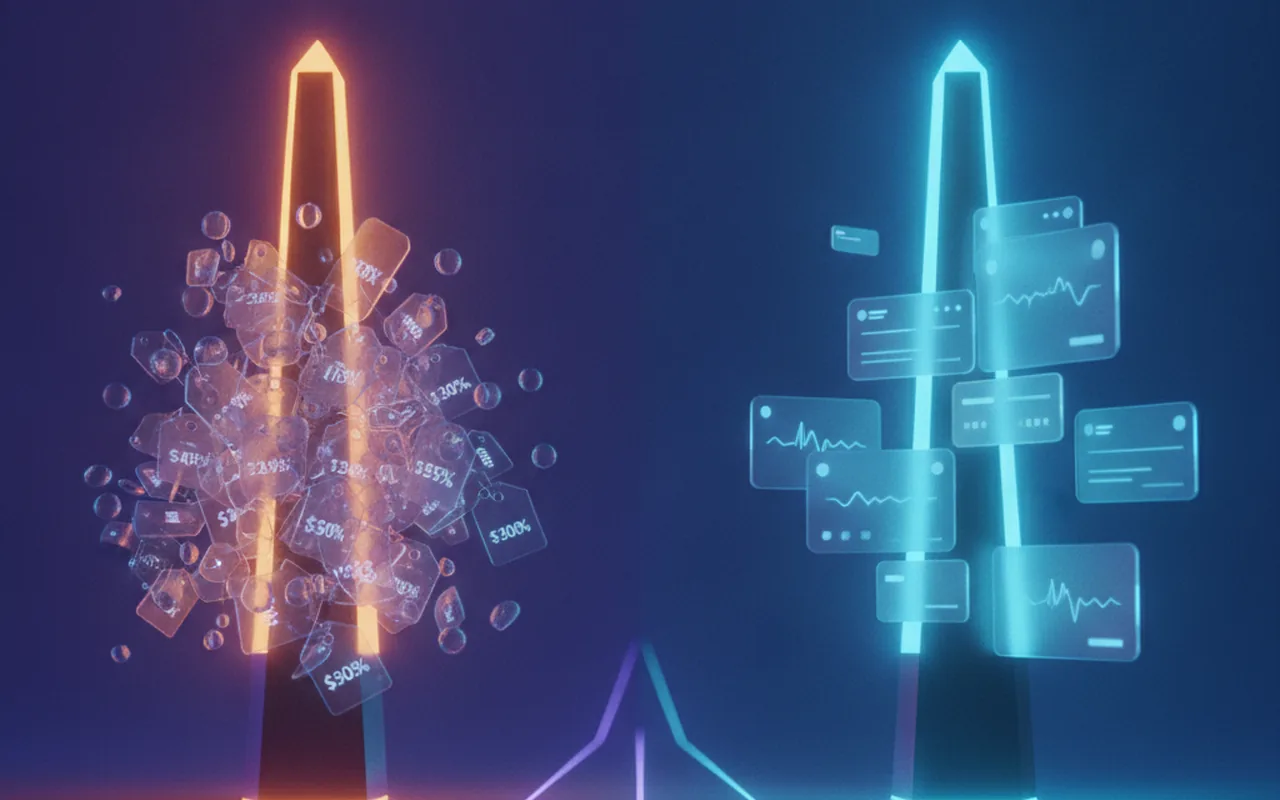
The single biggest question hanging over AI search — how will these answer engines make money? — got two opposite answers this year, and by mid-July 2026 the gap between them is impossible to ignore. OpenAI has turned ChatGPT into one of the fastest-growing ad platforms in tech history: sponsored results now surface in a large share of US replies. Perplexity did the reverse, killing its advertising business outright and betting everything on subscriptions. For marketers, this is no longer a philosophical debate about "AI and ads." It is a live media-buying decision with real budget attached.
Here is what actually happened, the numbers behind each strategy, and how to think about paid placement inside AI answers before your competitors lock in the cheap early inventory.
ChatGPT's ad pilot went from experiment to empire
OpenAI began quietly testing ads inside ChatGPT in February 2026, starting with logged-in US users on the free and lower-priced tiers. What looked like a cautious pilot scaled fast. By mid-2026, industry trackers reported that sponsored placements appear in roughly a quarter of ChatGPT replies globally and close to half of replies in the United States. The pilot has expanded beyond the US into a handful of additional countries, and early estimates put the program on a nine-figure annualized revenue run-rate within months of launch.
The mechanics matter. ChatGPT ads are not banner boxes bolted onto a page; they are contextual recommendations woven into a conversational answer, typically labeled as sponsored. Reported CPMs have hovered around the premium end of the display market, which makes sense given the audience: hundreds of millions of weekly users engaging in high-intent, problem-solving conversations rather than idle scrolling. When someone asks an assistant "what's the best CRM for a 10-person agency," the moment a paid answer lands is the moment a buying decision is being made.
That is exactly why this inventory is valuable — and why it echoes a pattern we have documented all year. As our breakdown of the 2026 buying journey showed, AI tools now dominate the discovery and evaluation stages, where preferences form. A sponsored slot at that stage is not a bottom-funnel retargeting nudge; it is a chance to enter the shortlist before the buyer ever opens a search bar.
Perplexity walked away from ads entirely
In the same month OpenAI switched ads on, Perplexity switched them off. The company discontinued its advertising business and moved to a subscription-first model, with leadership arguing that an answer engine people pay for has to stay objective — and that ads inevitably erode that trust. It was a striking move for a company that had spent 2025 courting brands with publisher revenue-share programs.
The financials suggest the bet is not reckless. Perplexity's annualized revenue reportedly crossed the $450 million mark in early 2026, up sharply from roughly $100 million a year earlier, driven by paid subscriptions and enterprise deals rather than ad load. The company is effectively wagering that a smaller, paying, ad-free audience is more defensible than a larger, monetized-by-ads one. For marketers, the practical consequence is blunt: you cannot buy your way into Perplexity answers. The only path to visibility there is to be genuinely worth citing.
Two models, side by side
The split comes down to who pays and how visibility is earned. The table below frames the decision the way a media planner should read it.
| Dimension | ChatGPT (ad-supported) | Perplexity (ad-free) |
|---|---|---|
| Monetization | Ads on free/low tiers + subscriptions | Subscriptions and enterprise only |
| Can you buy placement? | Yes — sponsored answers, US-led rollout | No paid inventory at all |
| Path to visibility | Paid bids and organic citations | Organic citations only (GEO) |
| Audience size | Hundreds of millions weekly | Smaller, paying, high-value |
| Marketer takeaway | New high-intent paid channel to test | Earn trust or stay invisible |
Notice that even on the ad-supported side, paid placement never replaces organic. A sponsored answer sits alongside the citations the model chooses on merit. So the honest reading of the whole market is not "buy ads or don't" — it is that Generative Engine Optimization is now the common denominator, and paid AI placement is an accelerant you can layer on top where it is available.
Why the money is moving this fast
Analysts expect US AI-search ad spend to climb from around $1 billion in 2025 toward the mid-$20-billion range by the end of the decade — a share of total search advertising that would have sounded absurd two years ago. Three forces are compounding to make that happen.
First, engagement quality. AI conversations carry more context than a two-word query, so a well-targeted sponsored answer reaches someone who has already described their problem. Second, scarcity. Early inventory is cheap relative to where it will settle once demand catches up — the same land-grab dynamic that made early Google and early TikTok ads a bargain in hindsight. Third, measurement is finally arriving: platforms are shipping the disclosure labels and reporting surfaces that big advertisers require before they commit real budget. Google's own July 2026 AI-ad disclosure rules are part of the same maturation — the ecosystem is building the guardrails that make AI ad spend defensible to a CFO.
What marketers should actually do now
1. Test ChatGPT ads as a discovery channel, not a closer
Treat sponsored AI answers the way you treated paid search discovery a decade ago: a way to enter consideration, not to harvest bottom-funnel demand. Start with a small budget on your highest-intent product categories, write ad copy that answers a question rather than shouting a slogan, and measure assisted conversions instead of last-click. The users are qualified; your creative has to earn the click on usefulness.
2. Do not let paid crowd out GEO
Because Perplexity and the organic half of ChatGPT can only be won through citations, the smartest budgets keep investing in quotable, answer-first content. Make your key facts server-rendered, welcome AI crawlers in robots.txt, and structure passages so a model can lift them cleanly. Our full guide to optimizing for AI search walks through the citation mechanics that decide which brands get quoted for free.
3. Keep product and pricing data machine-readable
Whether an AI is choosing a sponsored recommendation or an organic one, it needs parseable facts. Put prices, specs, and availability in HTML and Product schema — following Google's structured-data guidelines — not trapped in images or behind forms. Clean data is what lets you show up in both the paid and the earned slots. When those facts are buried in images or only appear after client-side rendering, the fix is a build-level one: the kind of server-rendered, schema-first foundation a software development studio like YuSMP Group engineers into a site from the ground up.
4. Watch your rising acquisition costs across every channel
AI ad inventory is cheap today, but paid channels rarely stay cheap. If you are already feeling the squeeze — as many advertisers describing rising Google Ads costs in 2026 are — treat AI search ads as a diversification play, not a rescue. Lock in early inventory while it is underpriced, but keep your organic and owned channels strong so a single platform's pricing power never controls your funnel.
The takeaway
The AI search advertising question has been answered — twice, in opposite directions. ChatGPT proved that people will tolerate ads inside answers if they are useful and clearly labeled, and it built a serious ad business in months. Perplexity proved there is a viable, well-funded path in staying ad-free and selling trust. Marketers do not have to pick a side; they have to show up on both. Buy the cheap, high-intent inventory where it exists, earn the citations everywhere it does not, and remember that in an answer-first world, being genuinely worth recommending is the only strategy that works on every platform at once.
Frequently asked questions
Does ChatGPT show ads in 2026?
Yes. OpenAI began testing ads inside ChatGPT in February 2026, initially for logged-in US users on the free and lower-priced tiers. By mid-2026, sponsored placements were appearing in a large share of US replies and the pilot had expanded to several additional countries. Ads are contextual, conversational recommendations labeled as sponsored, not traditional display banners.
Can you advertise on Perplexity?
No. Perplexity discontinued its advertising business in early 2026 and moved to a subscription-first model, arguing that an answer engine people pay for must stay objective. There is no paid placement to buy on Perplexity — the only way to appear in its answers is to be cited organically, which makes Generative Engine Optimization the sole lever.
How much are AI search ads worth?
Analysts project US AI-search ad spend rising from roughly $1 billion in 2025 toward the mid-$20-billion range by the end of the decade, eventually representing a meaningful slice of total search advertising. Growth is driven by high-intent conversational audiences, currently underpriced early inventory, and the arrival of disclosure and measurement tools that large advertisers require.
Should small businesses buy ChatGPT ads yet?
Testing early can pay off because inventory is still relatively cheap, but treat it as a discovery channel rather than a demand-harvesting one. Start with a small budget on your highest-intent categories, write answer-style copy, and measure assisted conversions. Do not divert budget away from organic AI visibility (GEO), since that is the only way to win Perplexity and the organic half of ChatGPT.
Do AI ads replace SEO or GEO?
No. Paid AI placements sit alongside the citations a model chooses on merit, and platforms like Perplexity have no ads at all. Organic visibility through Generative Engine Optimization remains the common denominator across every AI surface; paid placement is an accelerant to layer on top where it is available, not a substitute for being worth citing.