ChatGPT Ads Rolls Out oCPC, Product Carousels and AAM: What Advertisers Need to Do Before August 17
OpenAI quietly shipped its most significant ChatGPT Ads update yet in early August 2026, rolling out conversion-optimized campaigns, a multi-product carousel format, and new measurement integrations — all at once. Buried inside the release is a time-sensitive data decision: Automatic Advanced Matching (AAM) becomes the default for all existing web pixels on August 17. Advertisers who want to opt out have roughly a week. Search Engine Land confirmed the rollout details on August 7, 2026.
If you have been running ChatGPT Ads since the platform launched commercial inventory earlier this year, this update changes how you measure, bid, and present products. Here is what changed, what the deadline means, and what you should do about it before the switch flips automatically.
What launched: a summary of the August 2026 updates
OpenAI shipped five distinct changes to ChatGPT Ads in this release:
- oCPC campaigns (beta) — conversion-optimized cost-per-click bidding for product feed campaigns
- Multi-product carousel format — multiple products displayed in a single ad unit at the bottom of a conversation
- Automatic Advanced Matching (AAM) — hashed form-field data sent to OpenAI for improved conversion attribution
- Dynamic URL parameters — campaign, ad group, and ad IDs automatically appended to landing page URLs
- New measurement integrations — Triple Whale, Sonar Optimize, and Hightouch can now connect to ChatGPT Ads for external attribution
The updates collectively mark a shift from awareness-oriented placements toward a performance advertising model — the direction every major ad platform eventually moves after proving reach.
oCPC: what conversion-optimized bidding means for ChatGPT
Standard CPC campaigns on ChatGPT Ads charge per click regardless of what the user does after arriving on your site. oCPC changes the optimization target: the platform uses its signal data to prioritize clicks it predicts will convert, while you still pay on a cost-per-click basis.
In practice, oCPC is currently available only for product feed campaigns — the ad type that surfaces individual product listings in response to transactional queries. Advertisers can create oCPC campaigns from scratch in Ads Manager or clone an existing CPC campaign into an oCPC campaign, making migration low-friction for brands already running product ads.
The critical caveat is that oCPC is in beta. OpenAI needs conversion signal volume to optimize well; campaigns with low purchase data may see unpredictable results in the early weeks. The right test strategy is to run oCPC alongside an existing CPC campaign, not to replace your entire product feed spend immediately. Give each at least two to three weeks before drawing conclusions.
| Feature | Standard CPC | oCPC (beta) |
|---|---|---|
| Bidding optimization target | Clicks | Conversions |
| Payment model | Per click | Per click |
| Campaign types eligible | All | Product feed only |
| Signal dependency | Low | High (needs conversion data) |
| Best for | Awareness, testing | Performance, scale |
Product carousel ads: what they look like and who is live
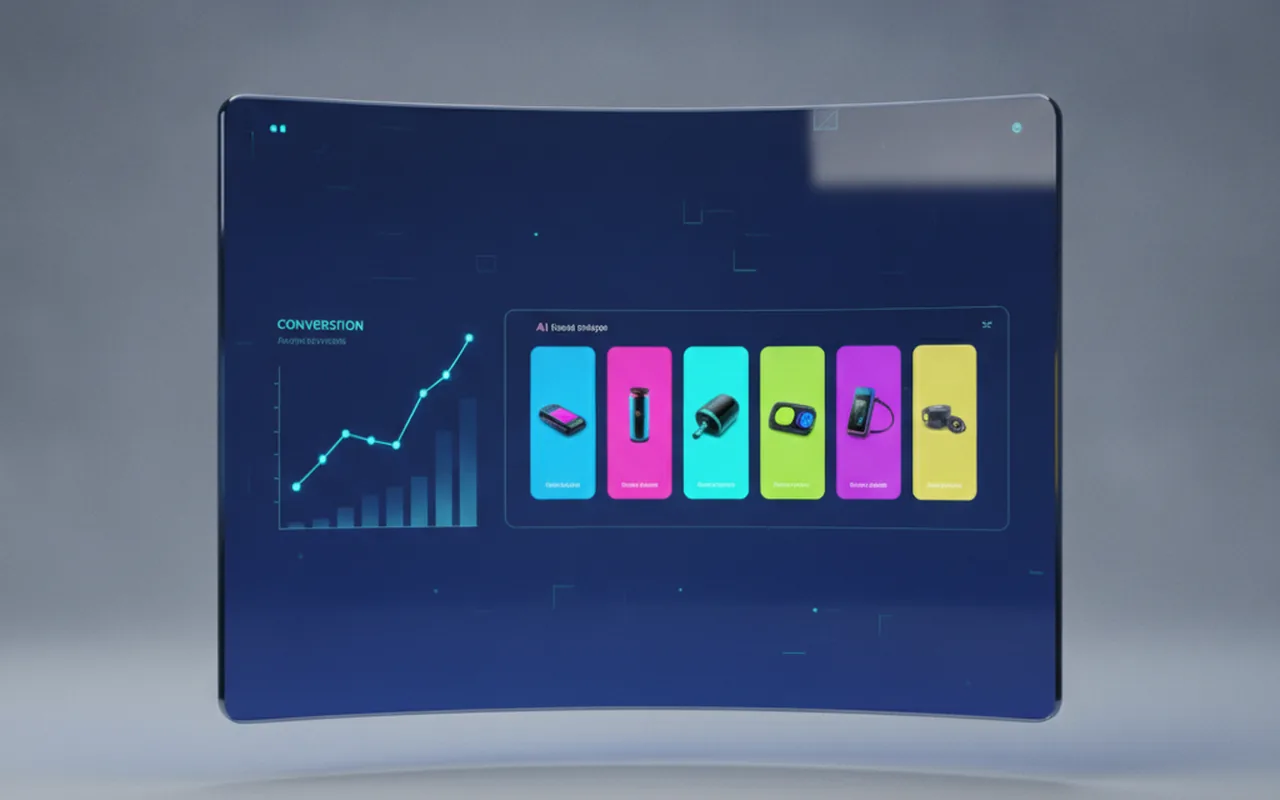
The carousel format places multiple product listings within a single ad unit at the bottom of a ChatGPT conversation. Where previous product ads showed a single item per placement, carousel allows several products to appear side by side — giving users a comparison surface without leaving the conversation.
OpenAI confirmed the format is already live for early brands including L.L.Bean, VistaPrint, and Walmart. The format appears in the same placement as standard product ads — below the AI response — but the visual treatment resembles a horizontal scroll of product cards rather than a single sponsored listing.
For advertisers, the carousel format raises two practical questions. First, which products should populate the carousel: complementary items, a product category, or your best-sellers? Second, how does rotation work — does OpenAI choose from your entire product feed, or do you control the lineup? The current documentation suggests the platform selects from your uploaded product feed, with rank influenced by relevance to the query. Manual curation is not yet available.
The implication for AI search advertising strategy is that product feed quality becomes more important, not less. Title clarity, accurate pricing, high-resolution images, and correct categorization all affect how your products appear in carousel placements — the same optimization principles that govern Google Shopping apply here.
The August 17 AAM deadline: what it is and what you need to decide
Automatic Advanced Matching (AAM) is a conversion attribution technique that collects hashed data from website form fields — email addresses, phone numbers — and transmits them to OpenAI's servers alongside conversion events. The matching layer can then attribute conversions to ad exposures that occurred before or without a direct click, improving reported conversion counts and giving the optimization algorithm richer signal.
The practical change on August 17, 2026: AAM becomes the default for all existing web pixels. If you take no action, your pixel will begin transmitting hashed form data on that date. Advertisers who want to opt out must navigate to Tools > Conversions > Data Source > Edit pixel in ChatGPT Ads Manager and disable the feature before the deadline.
Three things to understand before you decide:
- Compliance responsibility stays with you. OpenAI's documentation explicitly states that advertisers operating in jurisdictions with consent requirements — including the UK, EU, and California — are responsible for establishing a lawful basis for transmitting hashed form data to a third party. AAM does not change your GDPR, UK PECR, or CCPA obligations; it adds a new data flow that you need to assess against your existing consent model.
- Hashing is not anonymization. The data is hashed client-side before transmission, but hashed email addresses can still be matched and re-identified by any party that possesses the plaintext. If your privacy policy does not disclose sharing hashed personal data with advertising platforms, you may need to update it.
- Attribution uplift is real but varies. AAM typically improves reported conversion numbers — more conversions are attributed to ads. Whether this reflects actual incremental performance or attribution credit shifting from other channels depends on your measurement setup. Tracking AI referral traffic in GA4 alongside platform-reported conversions is the best way to triangulate.
For most direct-to-consumer advertisers with standard consent banners, enabling AAM is likely fine and worth the improved attribution signal. For regulated sectors — healthcare, financial services, legal — or any advertiser running privacy-first consent frameworks, audit the data flow before August 17 rather than after.
Dynamic URL parameters: finally, proper attribution hygiene
Before this update, tracking ChatGPT Ads performance in an external analytics tool required manually appending UTM parameters to landing page URLs — or accepting that the platform's reported data would not reconcile with your website analytics. Dynamic URL parameters solve this by automatically appending campaign ID, ad group ID, and ad ID to landing page URLs.
This brings ChatGPT Ads in line with how Google Ads and Meta Ads handle attribution for advertisers using GA4, Northbeam, Triple Whale, or other multi-touch tools. Once enabled, your UTM structure can capture ChatGPT-specific dimensions without manual upkeep on every ad variant. For teams running cross-channel campaigns alongside Google's August bidding changes, consolidated attribution data across both platforms becomes meaningfully more reliable.
New measurement integrations: Triple Whale, Sonar Optimize, Hightouch
OpenAI added three third-party measurement partners to the ChatGPT Ads ecosystem: Triple Whale (e-commerce attribution), Sonar Optimize (incrementality testing), and Hightouch (reverse ETL and audience sync). These integrations allow brands already using these tools to pull ChatGPT Ads conversion data into their existing measurement workflows without building custom connectors.
The addition of incrementality testing support via Sonar Optimize is particularly significant. One of the persistent objections to adding ChatGPT Ads to a media mix has been the difficulty of isolating incremental lift from conversions that would have happened anyway. An in-platform path to holdout testing removes that blocker for data-driven teams.
Geographic expansion: Brazil and Mexico
ChatGPT Ads is also expanding into Brazil and Mexico, with availability expected within the week of the August 7 announcement. For brands with Latin American audiences, this opens a new inventory surface with relatively low initial competition — early entrants to new markets on any ad platform tend to see lower CPCs before the auction matures.
The connection between ad performance and landing page quality
oCPC campaigns optimize toward conversions, which means the signal quality depends on what happens after the click — not just the click itself. An ad platform can deliver high-intent traffic, but if the landing page is slow, unclear, or poorly structured, conversion rates will underperform and the algorithm will receive weak training signal. For brands using oCPC on ChatGPT for the first time, collaborating with a web development team to audit landing page performance and conversion architecture is often as important as the bidding configuration itself.
Your August checklist for ChatGPT Ads
- Decide on AAM before August 17. Review your consent framework and privacy policy against the new data flow. If you are in a regulated sector or running a strict consent model, opt out proactively. For standard DTC brands, enabling AAM will likely improve attribution reporting.
- Enable dynamic URL parameters. This is low-risk and high-value. Add URL parameter templates to your campaign settings so your external analytics tools begin capturing ChatGPT-specific dimensions immediately.
- Test oCPC alongside existing CPC. If you have product feed campaigns with sufficient conversion volume (at least 30–50 purchases per month is a reasonable baseline), run an oCPC test campaign for three to four weeks before drawing conclusions.
- Audit your product feed. Carousel placement makes feed quality more important. Check that product titles are descriptive, images are high-resolution and square-cropped where possible, and pricing is accurate.
- Connect a third-party measurement tool if you use one. If you are already on Triple Whale, Sonar, or Hightouch, set up the native integration now rather than continuing to rely on manual exports.
- Consider LATAM expansion. If Brazil or Mexico represent meaningful markets for your products, launch a low-budget test campaign before the auction becomes competitive.
FAQ
What is oCPC in ChatGPT Ads and how is it different from standard CPC?
oCPC stands for conversion-optimized cost-per-click. You still pay per click, but the platform uses conversion signal data to prioritize clicks it predicts will lead to a purchase or other conversion event, rather than simply delivering any click. Standard CPC campaigns optimize for clicks without a conversion objective. oCPC is currently in beta and available only for product feed campaigns.
Do I have to opt into AAM, or does it turn on automatically?
AAM turns on automatically for all existing web pixels on August 17, 2026. If you want to opt out, you must navigate to Tools > Conversions > Data Source > Edit pixel in ChatGPT Ads Manager and disable the feature before that date. Newly created pixels already have AAM on by default.
What data does Automatic Advanced Matching collect?
AAM captures identifiers — typically email addresses and phone numbers — that users enter into website forms. These are hashed client-side before being sent to OpenAI's servers alongside the conversion event. The hashing reduces transmission risk but does not fully anonymize the data, and sharing hashed personal data may require a legal basis under GDPR, UK PECR, or CCPA depending on your audience geography.
How do product carousel ads differ from standard product ads on ChatGPT?
Standard product ads show a single product listing beneath a ChatGPT conversation. The carousel format displays multiple products side by side in one ad unit, allowing users to browse a selection without leaving the interface. OpenAI populates the carousel from your product feed based on query relevance; manual slot control is not currently available.
Which third-party attribution tools now integrate natively with ChatGPT Ads?
As of the August 7, 2026 update, Triple Whale, Sonar Optimize, and Hightouch integrate natively with ChatGPT Ads for conversion tracking, incrementality testing, and audience syncing respectively. Additional partners may be added as the platform matures.