AI Overviews Cut Publisher Clicks 39.8%: The First Causal Study

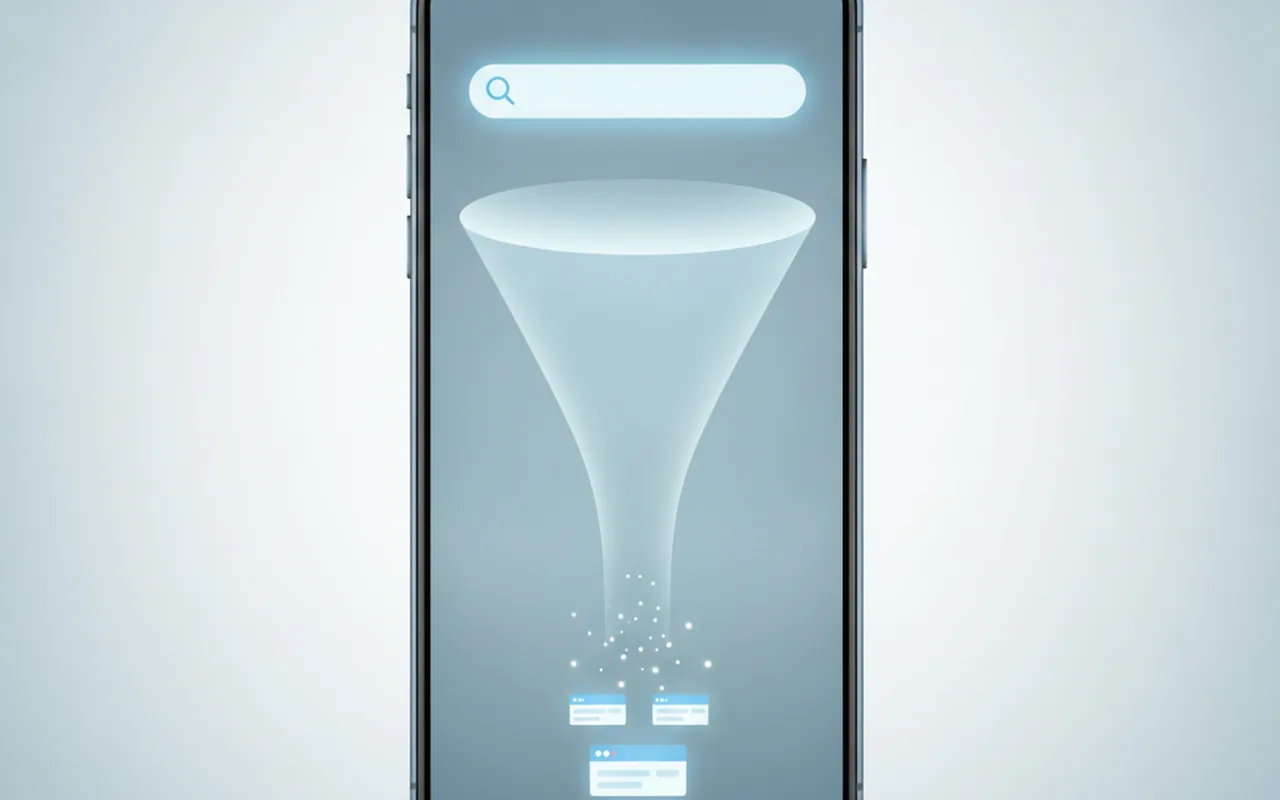
Publishers have argued for two years that Google's AI Overviews steal their traffic. Now there is causal evidence. A randomized field experiment — the first of its kind — finds that when an AI Overview appears, outbound organic clicks fall 39.8% and zero-click searches rise 34.5%, while clicks on sponsored results stay flat. The study, circulating widely across the SEO community this week, moves the AI Overviews debate from correlation to proof.
Just as striking is a second finding that undercuts Google's main defence. The clicks publishers lose are no lower in quality than the clicks they keep — and user satisfaction does not improve when an AI Overview is present. Here is what the research actually measured, why the method matters, and what it changes for anyone who depends on search traffic.
What the study measured
The experiment was run by Saharsh Agarwal of the Indian School of Business and Ananya Sen of Carnegie Mellon University's Heinz College. Rather than comparing pages that happened to trigger an AI Overview against pages that did not — the correlational approach behind most earlier estimates — the authors ran a genuine randomized controlled trial on real searches.
The setup, in brief:
- 1,065 desktop Chrome users were recruited and randomly assigned to a treatment or control condition.
- Data was collected from 7 January to 10 February 2026, capturing live Google searches as participants went about their day.
- The treatment group saw Google as normal, with AI Overviews present; the control group's experience suppressed the AI Overview, isolating its causal effect.
- Participants also answered short surveys on how satisfied they were with the results and how easily they found what they needed.
Because assignment was randomized, differences between the groups can be attributed to the AI Overview itself rather than to the type of query, the site, or the searcher — the confound that has dogged every prior study. The paper was first posted to SSRN in April 2026 and revised in June.
The three headline numbers
The results are unusually clean for a field experiment.
| Metric | Effect when an AI Overview is shown |
|---|---|
| Outbound organic clicks | Down 39.8% |
| Zero-click searches | Up 34.5% |
| Clicks on sponsored (ad) results | No significant change |
| User satisfaction / ease of finding info | No significant improvement |
Two patterns jump out. First, the traffic loss lands almost entirely on organic results — the free links publishers rely on — while paid clicks are untouched. Second, the AI Overview does not appear to make users happier or faster; satisfaction scores for the treatment and control groups were statistically indistinguishable. The summary box absorbs the click without delivering a measurably better experience.
Why "the lost clicks weren't lower quality" matters
Google's standard response to click-loss complaints is that AI Overviews send higher-quality clicks — that the people who still click through are more engaged, so publishers lose only low-value visits. This study tested that claim directly and did not find support for it. The clicks that disappeared behaved no differently from the clicks that survived; there was no visible upgrade in click quality to offset the drop in volume.
That reframes the trade. If AI Overviews mainly skimmed off idle, low-intent clicks, publishers could shrug. Instead, the evidence suggests the box removes ordinary, representative traffic across the board — the same traffic that historically converted, subscribed and generated ad revenue. It is worth noting the sample is modest (1,065 users) and desktop-only, so the exact percentages will vary by niche and device. But the direction and the mechanism are now backed by an experimental design, not a spreadsheet correlation.
How this fits the wider 2026 picture
The finding does not stand alone. It lands in a year where independent measurements keep pointing the same way — Google's own reported AI-search click-through data has fallen sharply, and survey work suggests the majority of US searches now end without any click at all. Our breakdown of the zero-click search data covers that correlational side of the story; this experiment supplies the causal spine underneath it.
The strategic takeaway is not new, but it is now better evidenced: ranking a blue link is no longer the whole game. When the answer is synthesized above the results, being one of the sources the model cites — and being visible in the surfaces where users still click — matters as much as position one. That is the entire premise of optimizing for AI search, and this study is the clearest reason yet to take it seriously.
What publishers and SEOs should do now
You cannot opt an entire industry out of AI Overviews, but you can adapt where your traffic and revenue come from. Five moves worth prioritizing:
1. Re-baseline your traffic expectations
Treat a ~40% organic-click haircut as the planning assumption for queries that reliably trigger an AI Overview — typically informational, "what/how/why" searches. Model your forecasts against that, rather than against pre-AI-Overview baselines that no longer exist.
2. Shift effort toward queries AI Overviews don't dominate
Transactional, navigational, local and highly commercial queries trigger AI Overviews less often and still send clicks. Rebalance your content calendar toward the intents where a click is still the natural next step.
3. Optimize to be cited, not just to rank
Lead sections with a direct, quotable answer; use clean headings, lists and tables; add concrete facts, dates and figures; and keep pages current. These are the passage-level signals AI engines lift into their answers, so citation keeps your brand visible even on a zero-click query.
4. Diversify beyond Google search
Reduce single-channel exposure. Email lists, communities, YouTube, Bing (which feeds Microsoft Copilot), social and direct brand demand all become more valuable as the search click gets scarcer.
5. Measure the signals AI leaves behind
Classic click dashboards under-report AI impact. Track referral visits from AI surfaces, monitor whether your brand is cited in AI Overviews and chat assistants, and watch impressions versus clicks to see where summaries are intercepting demand.
The takeaway
For two years, the AI-Overviews-hurt-publishers argument rested on correlations that Google could wave away. This randomized experiment closes that gap: AI Overviews cause a real, roughly 40% drop in organic clicks, the loss falls on ordinary traffic rather than junk, and users are no better served for it. The percentage will differ by industry and will keep moving as Google iterates — but the underlying shift is now established, not speculated. The winning response is not to fight the box; it is to build a presence that survives it — cited content, non-informational intents, and audience channels you own.