Perplexity Launches Portable Computer: A Local AI Agent With Zero Token Costs
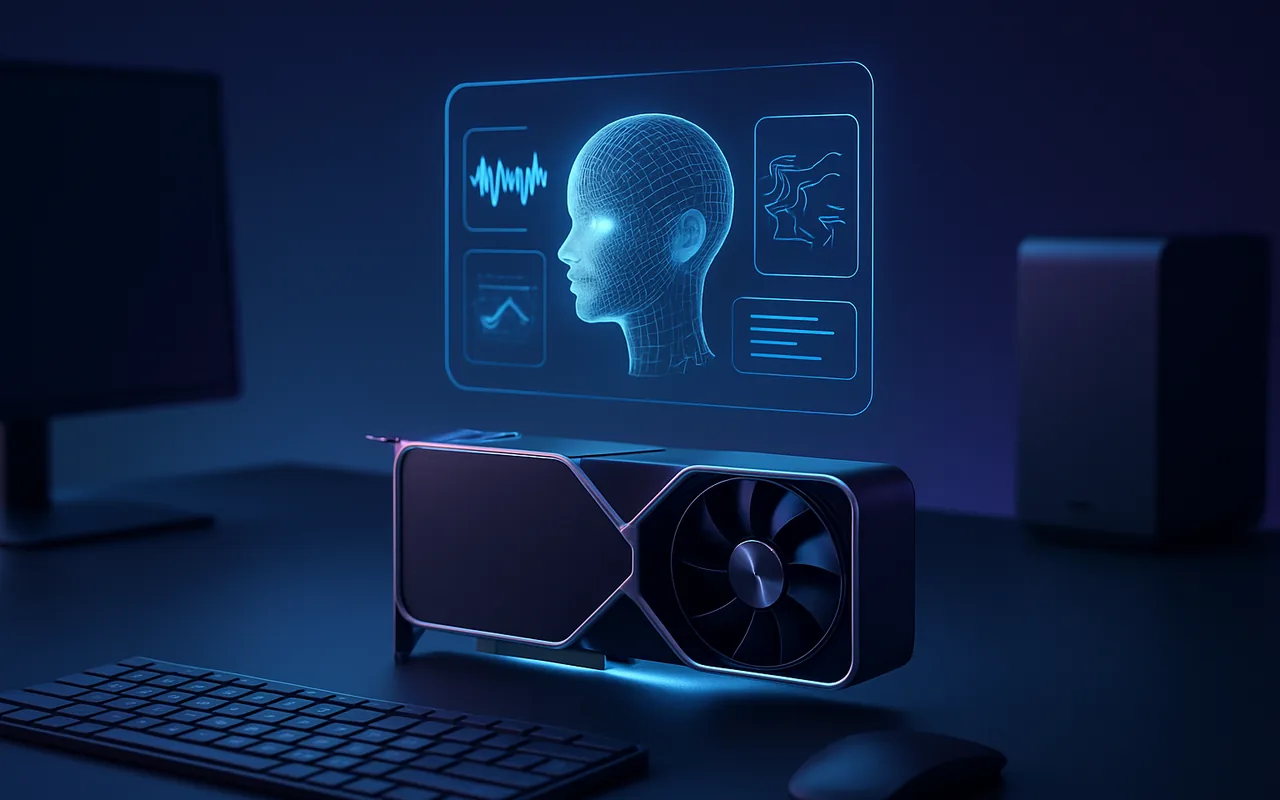
On August 25, 2026, Perplexity AI launched Portable Computer — an on-device AI agent that runs entirely on local hardware, incurs zero token costs for local tasks, and keeps data on-device by default. Developed in close partnership with Nvidia, Portable Computer is available on Nvidia DGX Spark desktop supercomputers and Linux machines with Nvidia RTX GPUs, with Windows support coming in September. VentureBeat and SiliconAngle both confirmed the launch details on the day of announcement.
Portable Computer is a local edition of Perplexity's cloud-based Computer agent, which launched in February 2026. Where the cloud version routes every step through Perplexity's servers, Portable Computer runs inference entirely on the GPU in front of you — escalating to the cloud only when you explicitly grant permission for a specific task. For teams and individuals who care about token economics, latency, or data confidentiality, this distinction matters considerably.
What Portable Computer is and how it differs from cloud AI
Most AI agent products in 2026 share a common architecture: your query goes to a cloud API, the model runs on the provider's servers, and a response comes back. You pay per token, your data touches their infrastructure, and the agent's throughput is constrained by network round-trips. This is the standard model for ChatGPT, Claude, Gemini, and most agentic tools built on top of them.
Portable Computer inverts this. The model weights are pulled down to your machine once, and inference runs locally on your Nvidia GPU. Tasks like researching a document, drafting content, writing and executing code, or browsing the web autonomously all happen without sending data to Perplexity's servers. There are no per-token charges for local work. If a task genuinely requires cloud capabilities — say, a web search that requires Perplexity's index — the agent asks permission before escalating, and that specific step is billed normally.
This architecture is not new in principle; tools like Ollama and LM Studio have offered local inference for some time. What Portable Computer adds is the full agentic layer on top: the same multi-step task orchestration, web browsing, file handling, and code execution that makes Perplexity's cloud Computer useful, now running locally. The gap between "local chatbot" and "local agent" is significant, and Portable Computer is the first product from a major AI lab to close it at production quality.
Hardware requirements and availability
Portable Computer launches on two hardware targets:
- Nvidia DGX Spark. The compact desktop supercomputer Nvidia launched in early 2026. At roughly $3,000–4,000, the DGX Spark is positioned as the entry point for serious local AI workloads. It runs Nvidia's Grace Blackwell architecture and is the reference platform for Portable Computer.
- Linux machines with Nvidia RTX GPUs. For users who already have a capable workstation, Portable Computer supports any Linux system running a recent RTX GPU with sufficient VRAM. The specific minimum VRAM threshold depends on the model you configure, but the 27B-parameter models at launch require a GPU with at least 24GB of VRAM to run comfortably.
At launch, Portable Computer is available to Perplexity Pro, Max, Enterprise Pro, and Enterprise Max subscribers. Free tier users are excluded for now. Windows support is confirmed for September 2026. macOS is not on the announced roadmap, which reflects Nvidia's absence from Apple silicon machines — a constraint Perplexity cannot work around.
The models powering Portable Computer
At launch, users can configure one of two models:
- Qwen 3.8 27B. Alibaba's 27-billion-parameter model, which has become a popular choice for local deployment due to its balance of capability and VRAM footprint. The 3.8 release added meaningful improvements to instruction following and tool-use accuracy over earlier Qwen versions.
- PPLX 27B. A version of the 27B architecture that Perplexity has post-trained on its own agent harness. Post-training here means fine-tuning on the specific task patterns Portable Computer uses — browsing, code execution, multi-step reasoning — to improve task success rates compared to using the base model weights directly.
Nvidia's Nemotron 3.5 Lightning is listed as coming soon, adding a third option optimized specifically for Nvidia hardware. Future model additions will likely expand as local inference for larger models becomes feasible on DGX Spark hardware.
The choice between Qwen 3.8 and PPLX 27B will depend on your workload. PPLX 27B's post-training on Perplexity's own agentic harness likely gives it an edge for the tasks the agent handles natively — research, browsing, file work. Qwen 3.8 may perform better for use cases that fall outside that training distribution, since its base capabilities are broader.
Zero token costs and the privacy architecture
The economic proposition of Portable Computer is straightforward: local tasks cost nothing per token once you own the hardware. For heavy users of cloud AI agents, token costs are a real operating expense. A team running dozens of multi-step research tasks daily can accumulate substantial API bills. Moving those workloads to local hardware converts a variable cost into a fixed one — the upfront GPU purchase — and eliminates the per-task overhead entirely.
The privacy architecture is equally direct. Data processed locally does not leave your machine. For individuals working with confidential client documents, internal business data, or any material subject to professional confidentiality obligations, this is significant. Cloud AI agents — including Perplexity Computer — process your inputs on the provider's servers, and even with enterprise data agreements in place, this creates a layer of third-party infrastructure between you and your data.
Portable Computer's permission model makes the cloud escalation point explicit: when a task requires cloud-side capabilities, the agent surfaces a permission prompt rather than silently routing data to Perplexity's servers. This design gives users a clear decision point rather than trusting implicit defaults. How AI tools are reshaping development workflows in 2026 covers the broader shift toward local and hybrid AI architectures that Portable Computer fits into.
Portable Computer vs cloud AI agents: a comparison
| Feature | Perplexity Portable Computer | Perplexity Computer (Cloud) | Typical Cloud Agent (GPT/Claude) |
|---|---|---|---|
| Token cost (local tasks) | Zero | Standard API rates | Standard API rates |
| Data leaves device | No (with permission gate) | Yes | Yes |
| Latency | GPU-bound (local) | Network + GPU (cloud) | Network + GPU (cloud) |
| Internet required | No (for local tasks) | Yes | Yes |
| Hardware requirement | Nvidia DGX Spark or RTX Linux | Any device | Any device |
| Agentic capabilities | Full (browse, code, files) | Full | Varies by provider |
| Windows support | September 2026 | Yes | Yes |
What this means for developers and teams
The practical implications of Portable Computer break down differently depending on who you are.
For individual developers and researchers. If you already own an RTX workstation running Linux, Portable Computer adds a capable agentic layer to your existing hardware at no additional per-task cost. The barrier is the subscription (Pro tier or above) and the VRAM requirement, neither of which is trivial — but for heavy users of cloud AI agents, the economics can favor local deployment within a few months of usage.
For teams handling sensitive data. The on-device architecture removes the cloud data-handling concern for local tasks. Teams in legal, finance, healthcare, or any field with strict data handling requirements can run AI-assisted research and drafting workflows without routing client data through a third party. This was previously impossible with capable agentic tools. Architecture decisions increasingly include AI infrastructure choices alongside application structure, and local-first AI is now a viable option for production workloads rather than an experiment.
For organizations evaluating AI infrastructure. Portable Computer signals that the local AI agent category is maturing beyond hobbyist deployments. When a well-funded AI lab ships a production-quality local agent in partnership with Nvidia, it validates the market for on-premise AI workloads in a way that community tools alone could not. Expect other major providers to respond with their own local agent offerings over the next 12 months.
For teams building custom software that needs to integrate AI agent capabilities — whether for internal tools, client-facing products, or back-office automation — the architecture choice between local and cloud inference is now a real design decision rather than a default. Development partners who understand both deployment models will increasingly differentiate themselves. Teams evaluating custom software development for AI-integrated applications should explicitly ask how prospective partners handle local-vs-cloud inference trade-offs — it is the kind of architectural decision that is expensive to revisit after implementation.
The open questions. Portable Computer's launch leaves several things unanswered. First, model updates: when Perplexity updates its cloud models, will local model weights be updated on a comparable cadence, or will local users run older capability levels? Second, multi-agent coordination: the cloud Computer supports Claude Fable 5 orchestration for complex tasks — it is unclear whether this extends to Portable Computer or whether local users are limited to single-model tasks. Third, the Windows gap: the September timeline for Windows is specific enough to be credible, but enterprise adoption on Linux requires teams to restructure their standard workstation environments in ways many IT departments will resist.
None of these are dealbreakers for the right use case. They are the questions worth asking before committing hardware budget to a Portable Computer deployment. Evaluating a development partner's AI tooling maturity in 2026 increasingly means understanding not just which models they use, but how they handle inference architecture and data residency — exactly the trade-offs Portable Computer surfaces.
FAQ
What is Perplexity Portable Computer and when did it launch?
Portable Computer is Perplexity AI's on-device AI agent, launched on August 25, 2026 in partnership with Nvidia. It runs on Nvidia DGX Spark desktop supercomputers and Linux machines with Nvidia RTX GPUs. Local tasks incur no token costs and keep data on-device by default. The agent escalates to Perplexity's cloud only when you explicitly grant permission for a specific step.
What hardware do I need to run Perplexity Portable Computer?
At launch, Portable Computer supports two hardware configurations: Nvidia DGX Spark (Nvidia's compact desktop supercomputer) and Linux PCs equipped with Nvidia RTX GPUs. Models at launch require GPUs with sufficient VRAM — the 27B-parameter options need at least 24GB. Windows support is confirmed for September 2026. macOS is not supported due to the absence of Nvidia silicon on Apple hardware.
Does Perplexity Portable Computer cost anything to use?
Local tasks have zero token costs — there are no per-request API charges for work that stays on-device. You do need a paid Perplexity subscription (Pro, Max, Enterprise Pro, or Enterprise Max). If a task requires cloud capabilities such as Perplexity's web index, the agent requests permission first, and that specific step is billed at standard rates. The hardware itself (DGX Spark or an RTX workstation) is a one-time cost you bear separately.
Which models does Perplexity Portable Computer use?
At launch, users can configure Qwen 3.8 27B or PPLX 27B — a version of the 27B architecture post-trained by Perplexity on its own agentic task harness. Nvidia's Nemotron 3.5 Lightning is coming soon as a third option. Model selection affects performance on specific task types: PPLX 27B is likely stronger on research and browsing tasks, while Qwen 3.8 covers a broader capability range.
How does Portable Computer handle data privacy?
Data processed locally never leaves your device. When a task requires cloud-side capabilities, Portable Computer surfaces an explicit permission prompt rather than silently routing data to Perplexity's servers. This design makes cloud escalation a conscious user decision rather than a background default — which is material for teams working with confidential documents, client data, or any information subject to professional or regulatory data-handling requirements.