Google Assistant Is Dead: Gemini Takes Over Android Starting September 4, 2026
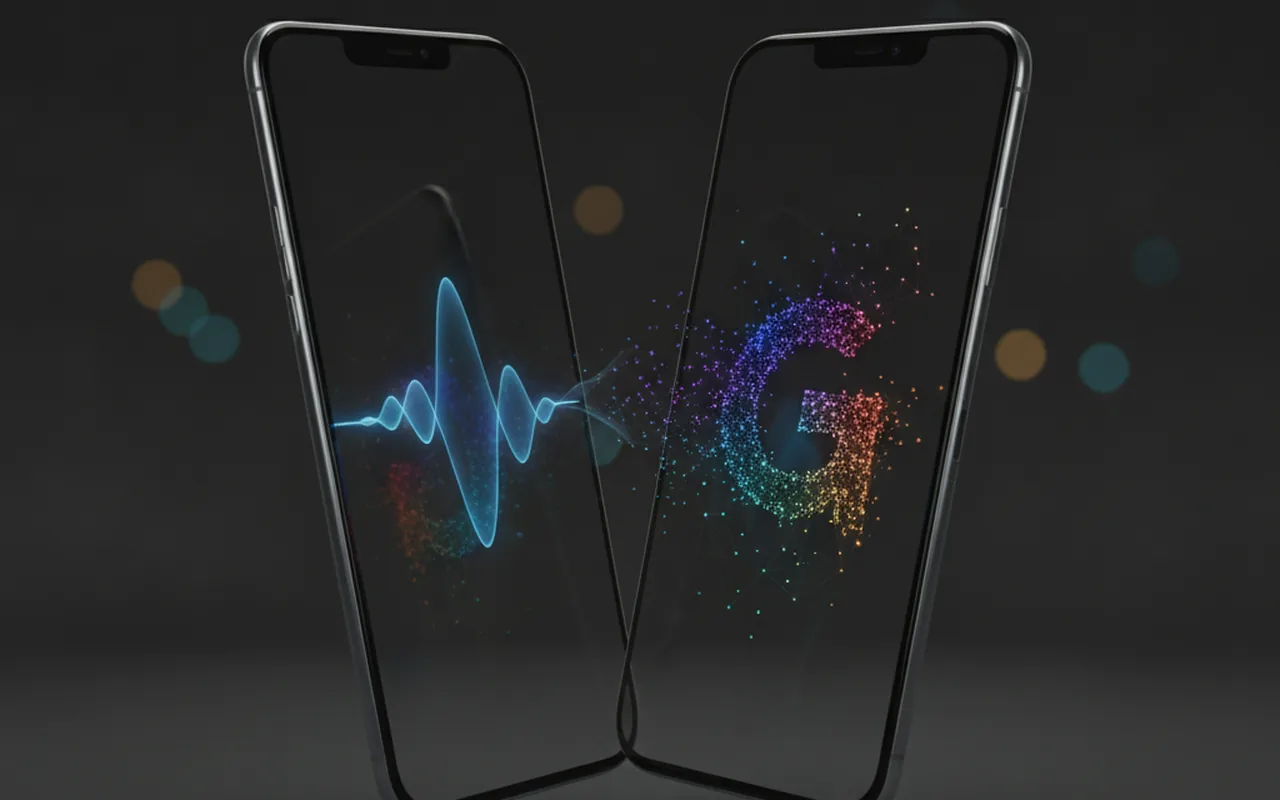
Starting September 4, 2026, Google began rolling out the final phase of its plan to replace Google Assistant with Gemini across all Android smartphones, tablets, Wear OS smartwatches, headphones, and Android Auto. The transition is progressive and will reach all devices worldwide over several weeks. When it completes, Google Assistant as a standalone voice assistant will effectively cease to exist on Android — replaced entirely by a large language model that processes commands through cloud inference rather than deterministic slot-filling.
For marketers, SEOs, and app developers, this is not a cosmetic change. Gemini operates differently from Google Assistant at a fundamental level: every voice query now goes through an LLM that reasons about intent rather than pattern-matching to a command grammar. That shift has direct consequences for how local businesses are surfaced, how apps handle in-app voice actions, and how voice search should factor into your broader AEO, GEO, and SEO strategy.
What exactly happened on September 4, 2026
According to The Decoder’s reporting and corroborated by Business Today, Google began shutting down the Google Assistant backend on Android devices starting September 4. The rollout is staged: users see Gemini replace the long-press home button, the “Hey Google” trigger, and the floating assistant overlay progressively as their device receives the update.
Android Auto and Wear OS are also included in this wave — voice commands in cars and on smartwatches will route through Gemini’s inference pipeline rather than Assistant’s local command grammar. The one notable exception is Google Home smart home devices, where Google has indicated a parallel migration timeline that has not yet been fully confirmed.
Google Assistant vs. Gemini: the technical difference that matters
Google Assistant was built on a deterministic intent-classification model. When you said “Set a timer for 10 minutes,” Assistant pattern-matched that phrase to a “create_timer” intent with a “duration” slot and fired a local API call. It was fast, predictable, and largely ran inference on-device for common intents.
Gemini is a multimodal large language model. Every query goes to Google’s cloud infrastructure for inference before any action is taken. The practical differences:
| Dimension | Google Assistant | Gemini |
|---|---|---|
| Query handling | Slot-filling intent model | LLM reasoning with full context |
| Inference location | Primarily on-device | Cloud (adds 380–620 ms latency) |
| Multi-turn conversations | Limited, session-scoped | Native, persistent context window |
| Ambiguous queries | Falls back to search or fails | Reasons through ambiguity, asks clarifying questions |
| App integration | App Actions / Shortcuts API | Gemini Extensions (new integration model) |
| Response format | Deterministic answer or card | Generated response, may include citations or actions |
The latency increase is the most immediately noticeable change for users. Simple commands like “call mom” or “navigate home” that previously resolved in under 200 ms now require a round trip to Google’s servers. Google has partially offset this by pre-caching common user patterns, but users in low-connectivity environments will notice degraded performance for tasks that were previously fast.
What this means for local SEO and voice search
Google Assistant’s local query resolution historically drew directly from Google Maps and Google My Business data. When someone asked “Hey Google, find a coffee shop near me,” Assistant pulled from the Local Pack and surfaced businesses ranked by proximity, reviews, and profile completeness.
Gemini changes this dynamic in two ways. First, it generates responses rather than simply surfacing a ranked list — so the phrasing of your Google Business Profile description, your Q&A section, and your review content becomes part of the source material Gemini may synthesize into its answer. Second, Gemini is the same model powering Google’s AI Overviews, meaning the AI search optimization principles that apply to Overviews now apply to voice as well.
Practical implications for local businesses:
- Update your Google Business Profile fully. Gemini reads profile descriptions and Q&A to construct answers. Thin or outdated profiles are less likely to be synthesized into a voice response.
- Use natural language in your profile content. Gemini responds better to conversational phrasing than keyword-stuffed listings. Write your GBP description the way a customer would ask for your service.
- Prioritize review recency and volume. Gemini factors review signals similarly to how AI Overviews weight E-E-A-T signals. Recent reviews matter more than a single high rating from three years ago.
- Add structured FAQ content. Google’s Gemini can pull from FAQ schema and SpecialAnnouncement markup when generating voice responses about local businesses.
App developers: Google Assistant App Actions are deprecated
If your Android app integrated with Google Assistant via App Actions or the Shortcuts API, that integration will no longer function once Gemini completes the transition on a user’s device. Google has replaced the App Actions model with Gemini Extensions, which use a different declarative integration format based on OpenAPI-style capability definitions.
The migration timeline is not optional: App Actions are being deprecated alongside Google Assistant itself. Apps that relied on voice-triggered in-app actions — ordering within a food delivery app, playing specific content in a media app, or triggering workflows in a productivity tool — need to rebuild those integrations for the Gemini Extensions model.
Rebuilding Assistant integrations for Gemini requires both API-level changes and a rethinking of how voice commands map to app capabilities. Teams managing this migration typically treat it as a new mobile app development engagement, not a simple API swap — because the way Gemini understands intent from a natural language instruction is fundamentally different from how App Actions parsed structured shortcut invocations.
Google’s developer documentation for Gemini Extensions is available in the Android Developers portal. If your app has a published App Actions integration, you should audit which user flows depended on it before the rollout reaches your users’ devices.
Wear OS and Android Auto: the overlooked surfaces
Most coverage of the Gemini transition focuses on phones. But Wear OS and Android Auto are equally affected, and they have distinct user experience constraints that make the Gemini transition more complex on these surfaces.
Wear OS: Smartwatch users have been accustomed to one-shot voice commands that execute locally or in near-zero latency — checking heart rate, setting timers, sending quick replies. Routing these through Gemini’s cloud inference adds latency that feels particularly jarring on a wrist device. Google has not announced a Wear OS–specific optimization path. Users in areas with poor LTE connectivity on their paired phone will experience the most degradation.
Android Auto: In-car queries present a safety consideration. Google Assistant’s fast, deterministic responses for navigation and media control were well-suited to eyes-free, hands-free use. Gemini’s generative, sometimes verbose responses are a different pattern for a driving context. Google has indicated it will ship a “Driving Mode” version of Gemini for Android Auto, but as of September 4, the standard Gemini model is what drivers encounter.
Impact on AI Overviews and voice-driven search traffic
Gemini on Android is not a separate product from the Gemini powering Google’s web-based AI Overviews — it is the same model family, increasingly sharing the same knowledge graph and retrieval pipeline. The convergence means that sites optimized for AI Overviews are also, increasingly, optimized for voice queries on Android.
The key optimization lever is passage-level answerability. Gemini responds to voice queries by selecting and synthesizing the most direct, self-contained passage it can find on the topic. Content structured with clear headings, direct definitions, and concise factual statements will be preferentially cited. Use tools that measure your AI citation visibility to see whether your content surfaces in Gemini-mediated responses, not just in traditional SERP positions.
Timeline and what to expect next
The September 4 rollout is progressive. Based on Google’s typical staged rollout pattern, expect:
- September 4–14: Initial wave reaches devices running Android 14+ on Pixel and Samsung Galaxy flagships.
- September 14–28: Broader rollout to Android 12+ devices across all OEMs.
- October 2026: Older Android versions and Wear OS / Android Auto reach full transition. Google Home timeline to follow separately.
Users who have already switched to Gemini manually will see no change. Users who are still on Google Assistant will receive an in-app prompt or be automatically migrated depending on their device’s rollout cohort.
Key takeaways for marketers and developers
- Google Assistant is being replaced by Gemini on all Android surfaces starting September 4, 2026; the migration will complete by late October.
- Gemini uses cloud LLM inference, adding 380–620 ms latency but enabling conversational, context-aware voice interactions.
- Local SEO for voice now follows the same AI Overviews optimization logic: conversational GBP content, recent reviews, and structured FAQ data matter most.
- App Actions integrations are deprecated; developers must migrate to Gemini Extensions before their users’ devices update.
- Wear OS and Android Auto face unique UX challenges from the latency increase; dedicated optimizations from Google are expected in Q4 2026.
Frequently asked questions
Is Google Assistant completely gone after September 4, 2026?
Not immediately for all users — the rollout is staged and will take several weeks to reach all Android devices globally. However, once Gemini reaches your device, Google Assistant will no longer function as the active voice assistant. Google has confirmed there is no opt-out for the migration.
Will my Hey Google commands still work with Gemini?
Yes. The “Hey Google” hotword continues to work and activates Gemini instead of Google Assistant after migration. The activation phrase is the same; what happens after activation is different — you are now talking to a generative AI rather than a command-intent model.
Do I need to update my Google Business Profile because of this change?
You do not need to do anything urgent, but updating your GBP description and Q&A section with natural, conversational language will improve how Gemini synthesizes answers about your business in response to voice queries. The same optimization that helps you in AI Overviews helps you in Gemini voice results.
What happens to App Actions I built for Google Assistant?
App Actions are deprecated as part of this transition. You need to migrate to Gemini Extensions to maintain voice-triggered in-app functionality. Google’s developer portal has migration guides, but the integration model is different enough that this is effectively a rebuild, not a simple update.
Does this affect Google Search results on desktop?
Not directly. This transition is specifically about the voice assistant on Android devices. Google Search on desktop and the broader AI Overviews feature operate independently, though they share the same underlying Gemini model family. Changes to how Gemini handles voice on Android do not alter desktop SERP rankings.