EU Orders Google to Share Search Data With AI Rivals: What It Means for SEO
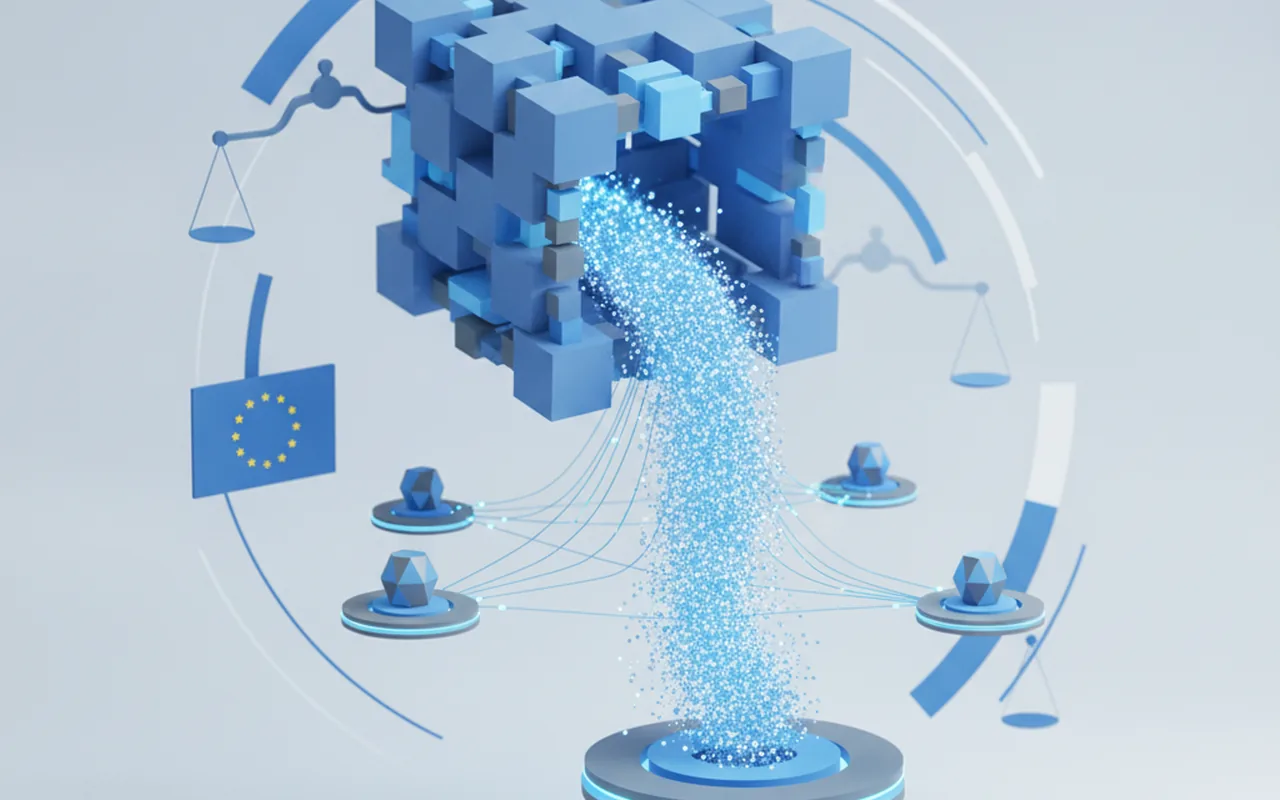
On July 16, 2026, the European Commission handed Google its most consequential search ruling in years. Under the Digital Markets Act (DMA), Alphabet must now share anonymized query, ranking, click and view data from Google Search with rival search engines and AI providers — data that, until now, only Google could collect at the scale it does. Sharing begins in January 2027, and the first named recipients already include OpenAI.
It is the clearest sign yet that the moat around Google's search index is being pried open by regulators rather than competitors. For anyone doing SEO, the question is no longer academic: if the data that trains and grounds AI answers stops being a Google-only asset, the map of where your audience finds you is about to be redrawn. Here is what the order actually says, and what it changes for how you optimize.
What the European Commission actually ordered
The Commission issued two separate sets of binding "specification measures" — legally detailed instructions on how Google must comply with the DMA. They target two different chokepoints:
- Search data sharing. Google must give third-party search engines and AI services access to anonymized data on how people search: the queries typed, the results shown and ranked, and which results users clicked and viewed. The stated aim is to "rebalance the playing field" by giving rivals access to signals that only Google Search can gather at scale.
- AI interoperability on Android. A second measure forces Google to open certain Android capabilities so competing AI assistants can plug into the operating system on fairer terms, rather than Gemini enjoying privileged, built-in access.
Both measures are aimed squarely at the same problem the regulator sees: Google's dominance in search and in mobile has become the fuel for its dominance in AI, and the DMA is designed to stop one monopoly from bootstrapping the next.
The details that matter for marketers
The headline — "Google must share search data" — hides the parts that decide how big a deal this really is. Four details stand out.
| Element | What the order says |
|---|---|
| Data covered | Anonymized query, ranking, click and view data from Google Search |
| Who can access it | Rival search engines and AI providers (OpenAI named among the first) |
| Anonymization | Multi-layered technical alteration to block re-identification, aligned with draft DMA–GDPR joint guidelines |
| Start date | January 2027 |
| Pricing & access | A defined formula sets the price of shared data; a transparent request process governs access |
| Google's safeguard | Google may assess whether sharing with a specific party poses serious security or data-protection risk before releasing data |
Two things follow. First, this is aggregate behavioural data, not a copy of your analytics — no rival gets a feed of individual users. Second, it is EU-scoped and slow: the sharing applies to the European market and does not switch on until 2027, with a pricing-and-access framework that competitors still have to work through. This is a structural shift, not an overnight one.
Why this is a big deal even though it's "just data"
Click and query data is the single most valuable input in modern search. Knowing which result people actually pick for a query — and which they bounce back from — is how an engine learns what a good answer looks like. Google has spent two decades accumulating that signal at a scale no rival could match, and that gap is a large part of why alternative search engines never caught up.
Handing anonymized versions of that signal to competitors chips away at the advantage. A challenger search engine, or an AI answer engine like the ones behind ChatGPT or Perplexity, can use it to rank and ground results more like Google does — without needing a billion daily users first. If it works as intended, the practical outcome is more credible non-Google search and AI surfaces, and therefore more places your audience might land.
That trend was already underway. As we covered in our guide to AI referral traffic in 2026, a growing slice of visits now arrives from AI assistants rather than the classic blue links. A regulatory push that strengthens Google's rivals only accelerates the fragmentation of where discovery happens.
What changes for SEO — and what doesn't
It is easy to over-read a ruling like this. Most day-to-day SEO fundamentals are untouched. But the direction of travel is clear, and it reinforces shifts that were already in motion.
1. Optimizing for "Google" becomes optimizing for a field of engines
If rival engines can rank and answer more like Google, the marginal cost of showing up in more than one place drops. The winners will be sites whose content is authoritative and cleanly structured enough to be picked up by any retrieval system, not just Google's crawler. That is exactly the discipline behind optimizing for AI search: lead with the answer, structure passages so they extract cleanly, and back claims with data and sources.
2. Ranking logic may converge across engines
When multiple engines learn from the same anonymized click signals, the features that make a page "win" tend to look similar everywhere. That is good news for anyone doing durable SEO: a page that genuinely satisfies the query is more likely to travel well across surfaces, while thin content that games one algorithm has fewer places to hide.
3. Brand and topical authority matter more, not less
Aggregate click data tells an engine which domains people trust for a topic. As that signal spreads beyond Google, the sites with deep, consistent coverage of a subject gain an edge across every engine that consumes the data. This is why building topical authority — full entity coverage, pillar content, first-hand expertise — is the highest-leverage investment you can make right now.
4. Measurement gets harder before it gets easier
More engines pulling from shared data means more surfaces that can cite you without sending a classic, trackable click. Referral attribution from AI tools is already patchy; a more crowded field makes brand-mention monitoring and manual prompt-checking even more important than dashboard sessions.
What Google says — and the bigger regulatory picture
Google has consistently argued that DMA-mandated data sharing risks user privacy and undermines the very security and quality that made its search useful, and it has flagged concerns about handing competitively sensitive signals to rivals. The Commission's answer is the anonymization framework and the per-recipient security assessment baked into the order — an attempt to preserve utility while limiting re-identification and abuse.
Zoom out and this fits a pattern. Regulators on both sides of the Atlantic are treating access to search and behavioural data as the key battleground of the AI era, precisely because whoever holds that data can build the best answer engine. The EU is the first to convert that theory into a binding order with a start date. Whatever happens in 2027, expect other jurisdictions to watch closely and, likely, follow.
A practical checklist for the next 18 months
You cannot control regulation, but you can position for a more fragmented search landscape. Focus on the moves that pay off no matter which engines gain share:
- Write answer-first, extractable content. Put the direct answer in the first two sentences of a section, then support it. This is what every retrieval-based engine rewards.
- Deepen topical coverage. One strong article is not authority; a complete cluster around a topic is. Aim to be the obvious source an engine reaches for.
- Keep content current. Continuous, unannounced updates mean freshness is a standing signal, not a one-off. See our look at Google's always-on algorithm updates for why.
- Diversify beyond Google. Verify your site in Bing Webmaster Tools, watch referral traffic from AI domains, and check whether you are cited across ChatGPT, Perplexity and Copilot — not just AI Overviews.
- Strengthen brand signals. Consistent mentions, reviews and citations across the web are what aggregate data reflects. The stronger your off-site footprint, the better you travel across engines.
The takeaway
The EU's order does not upend SEO tomorrow — the data sharing is anonymized, EU-scoped and does not begin until January 2027. But it confirms the direction the whole market is moving: search is becoming a field of AI-powered engines rather than a single dominant one, and the data advantage that kept Google unchallenged is being deliberately loosened. The sites that thrive will be the ones that stop optimizing for one algorithm and start earning trust that any engine can recognize — authoritative, well-structured, genuinely useful content. Build that now, and a more competitive search landscape becomes an opportunity rather than a threat.